
7 Essential Linux Reverse Proxy Solutions to Try in 2025
Managing web traffic and securing applications on Linux servers is becoming more challenging as we approach 2025. The rise of cloud computing, microservices, and ever-increasing traffic volumes means IT teams must stay ahead of the curve.
This article spotlights the top linux reverse proxy solutions that professionals, developers, and enterprises should know. These tools are essential for scaling, protecting, and optimizing modern infrastructure.
We will explore seven standout options, each designed to meet the needs of cloud-native, containerized, and high-traffic deployments.
Ready to boost uptime, simplify traffic management, and lock down your Linux servers? Discover which reverse proxy fits your strategy for the year ahead.
What Is a Linux Reverse Proxy and Why Is It Essential in 2025?
The Role of Reverse Proxies in Modern Infrastructure
A linux reverse proxy acts as an intermediary between clients and backend servers, handling incoming web requests and distributing them efficiently. Unlike a forward proxy, which represents clients and hides their identity, a linux reverse proxy stands on the server side, managing and optimizing how requests reach internal resources.
When a client makes a request, the linux reverse proxy receives it, determines the best backend server to handle it, and then forwards the response back to the client. This process improves scalability, reliability, and overall performance.
Reverse proxies have become a backbone for load balancing, SSL termination, caching, and bolstering security. By offloading SSL/TLS encryption from backend servers, a linux reverse proxy streamlines secure communication and simplifies certificate management.
In 2025, the importance of linux reverse proxy solutions extends to microservices, Kubernetes, Docker, and cloud-native deployments. As businesses increasingly adopt distributed architectures, reverse proxies help orchestrate service discovery, traffic routing, and centralized access control.
Adoption rates for linux reverse proxy tools are climbing sharply. According to Reverse Proxy Market Share Trends, usage has surged in enterprise environments, reflecting the critical role these solutions play in uptime, speed, and DDoS mitigation.
Key Features to Look for in a Linux Reverse Proxy Solution
Selecting the right linux reverse proxy involves evaluating features that support demanding, modern workloads. Here are the essentials to consider:
- Scalability and Performance: Can the linux reverse proxy handle high traffic and scale horizontally as your needs grow?
- Modern Protocol Support: Look for compatibility with HTTP/2, HTTP/3, WebSockets, and gRPC to ensure future-proofing.
- Security Enhancements: Features like SSL/TLS termination, authentication, and access control are vital for protecting data in transit.
- Caching and Content Acceleration: Efficient caching reduces latency and server load, improving end-user experience.
- Ease of Configuration: Solutions that integrate with automation tools and offer straightforward setup save time and reduce errors.
- Monitoring and Analytics: Built-in dashboards, logging, and support for observability tools help you track performance and spot issues early.
- Community and Active Development: An active linux reverse proxy project ensures timely updates, security patches, and a wealth of shared knowledge.
When assessing these features, match them with your organization’s priorities, such as API gateway capabilities, web acceleration, or microservices ingress. The right linux reverse proxy will not only meet today’s requirements but also adapt as your infrastructure evolves.
7 Essential Linux Reverse Proxy Solutions to Try in 2025
Managing modern web infrastructure demands a robust linux reverse proxy to balance scalability, security, and performance. Below, discover seven top-tier solutions every IT professional should consider for 2025. Each offers unique strengths for cloud, containerized, and high-traffic environments.
NGINX
NGINX is arguably the most recognized linux reverse proxy solution worldwide. This open-source powerhouse serves as both a reverse proxy and a high-performance web server.
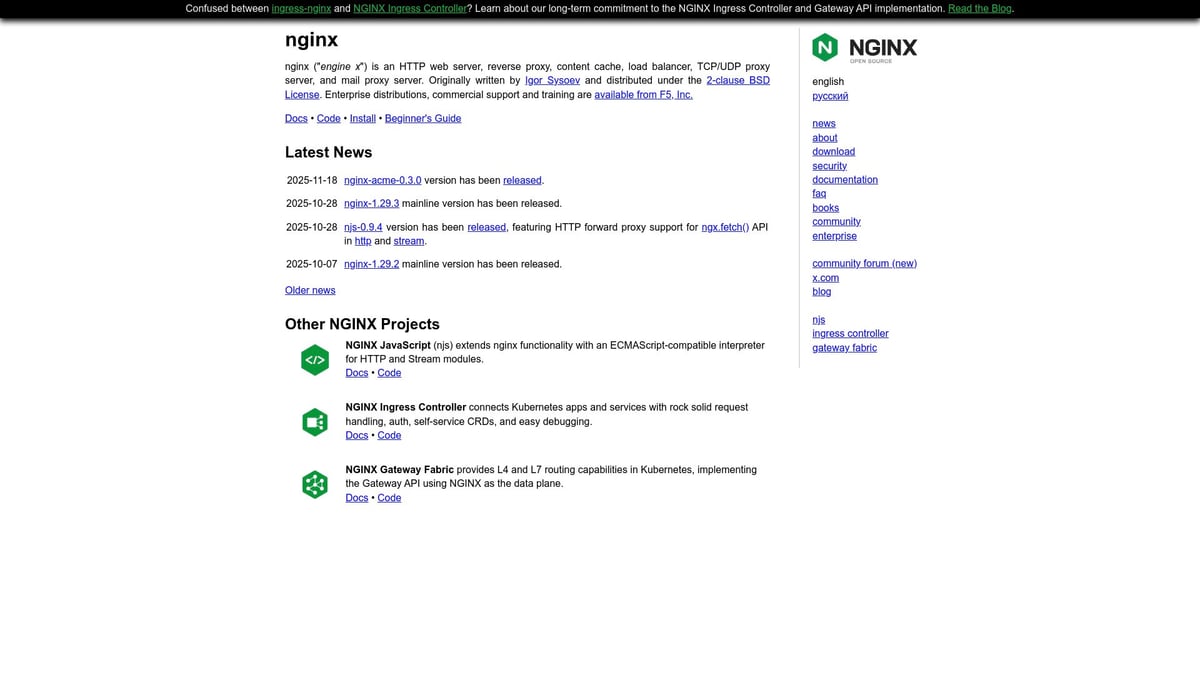
Its core features include HTTP/HTTPS proxying, advanced load balancing, static and dynamic content caching, and full support for HTTP/2 and HTTP/3. NGINX excels at SSL termination, making it a prime choice for secure deployments.
What sets NGINX apart is its modular architecture and low resource consumption, enabling it to handle massive traffic surges with minimal CPU and memory usage. Extensive documentation and a thriving community support both beginners and experts as they scale their linux reverse proxy infrastructure.
You can use NGINX for free, or opt for NGINX Plus, a commercial edition (starting at $2,500/year per instance) that unlocks advanced features like enhanced monitoring and dynamic reconfiguration.
Ideal use cases include:
- High-traffic websites and web apps
- API gateway deployments
- Microservices and container orchestration environments
Pros:
- Large, active community
- Robust security and performance
- Flexible, modular configuration
Cons:
- Steeper learning curve for advanced setups
- Some enterprise features are paid-only
Example: Major players such as Netflix, Dropbox, and WordPress.com leverage NGINX as their linux reverse proxy to manage global traffic efficiently.
HAProxy
HAProxy is a staple in the linux reverse proxy landscape, renowned for its speed and reliability. As an open-source TCP/HTTP load balancer, it’s trusted by some of the world’s busiest sites.
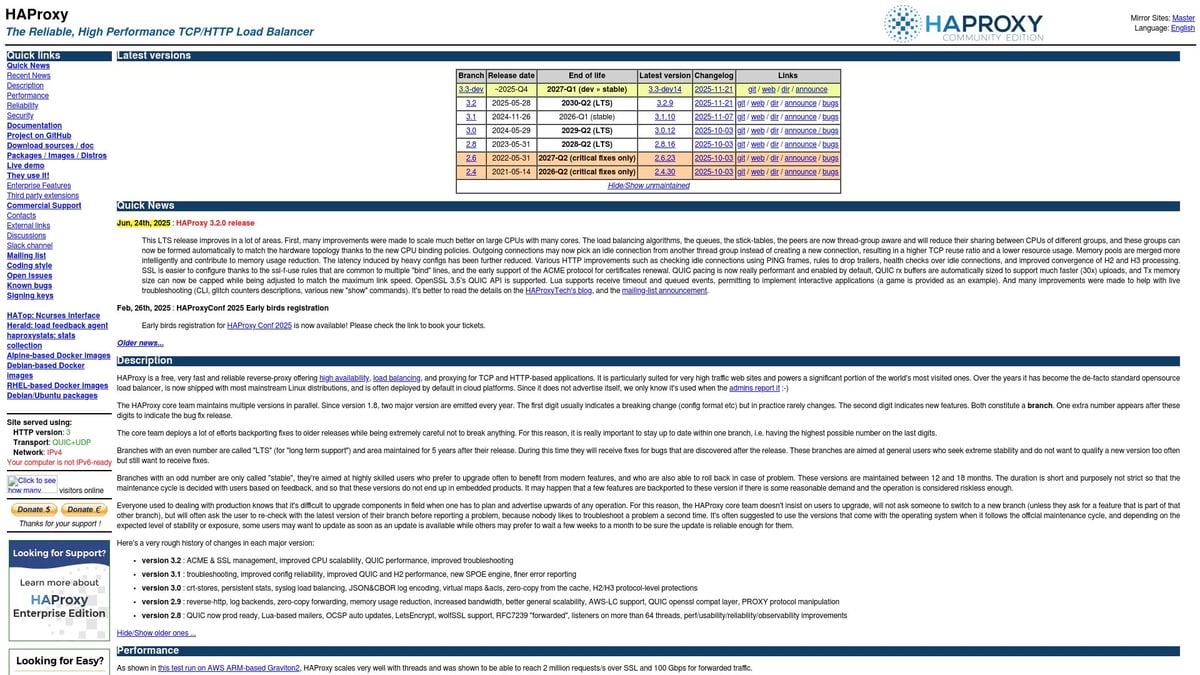
HAProxy stands out with its advanced load balancing algorithms, SSL offloading, health checks, and session stickiness. It supports the PROXY protocol, enabling seamless client IP forwarding even behind multiple proxies.
Performance under high concurrency is where HAProxy shines, with minimal latency and exceptional throughput. Its granular monitoring and logging tools help teams optimize and troubleshoot with precision.
HAProxy is free to use, with a commercial Enterprise edition offering premium features and support.
Ideal use cases:
- Mission-critical applications needing high availability
- Redundant, multi-node linux reverse proxy setups
- Environments requiring detailed traffic analytics
Pros:
- Lightweight and reliable
- Outstanding monitoring capabilities
- Scales effortlessly for large deployments
Cons:
- Configuration via command-line can be daunting for newcomers
Example: GitHub, Reddit, and Stack Overflow rely on HAProxy to keep their linux reverse proxy infrastructure resilient and fast.
Traefik Proxy
Traefik Proxy is designed for the cloud-native era, making it a favorite linux reverse proxy for dynamic and containerized workloads. Its auto-discovery feature automatically detects new services, reducing manual configuration.
Traefik integrates seamlessly with orchestration tools like Kubernetes, Docker, and Consul. It offers dynamic configuration, Let’s Encrypt SSL automation, a REST API, and real-time metrics for observability.
The open-source version is free, while Traefik Enterprise provides advanced security, scalability, and support for larger organizations.
Ideal use cases:
- Microservices and DevOps pipelines
- Kubernetes ingress controller
- Rapidly changing linux reverse proxy environments
Pros:
- Easy and fast setup
- Automatic HTTPS with certificate renewal
- Hot config reloads without downtime
Cons:
- Some enterprise-grade features require the paid version
Example: Traefik is widely adopted for Kubernetes ingress, making it a go-to linux reverse proxy for cloud-native teams.
Varnish Cache
Varnish Cache is a high-performance HTTP accelerator that doubles as a linux reverse proxy. Its specialty is caching, which can dramatically speed up web applications by serving content directly from memory.
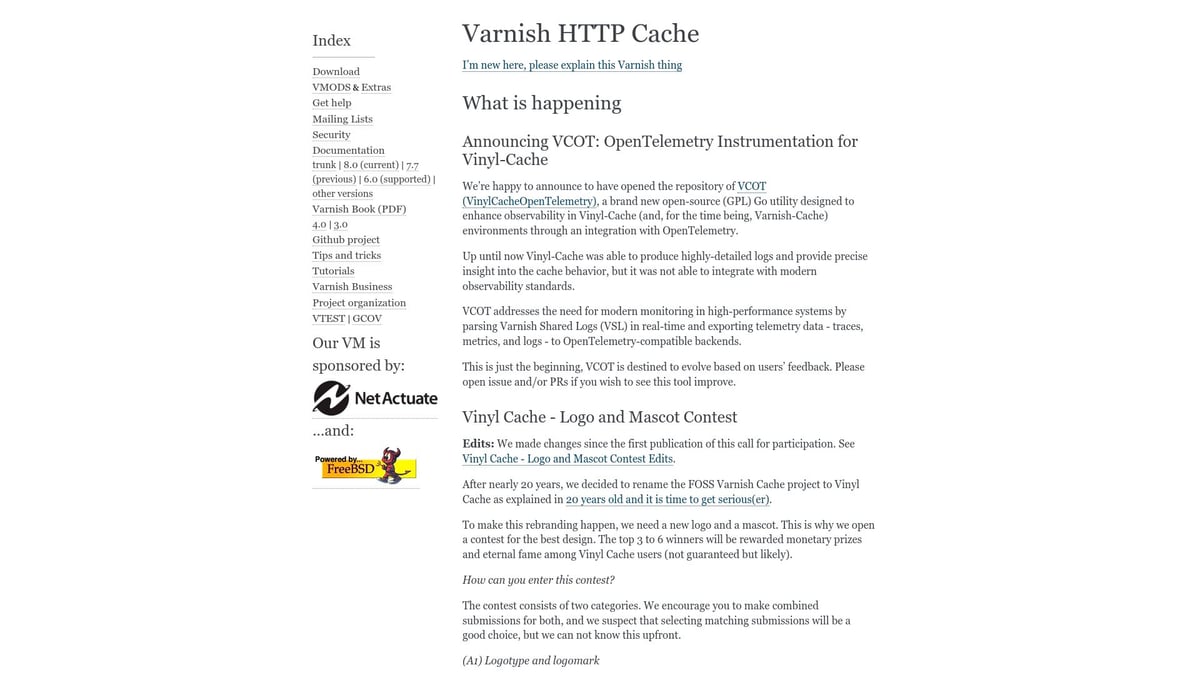
Varnish uses its own Varnish Configuration Language (VCL) for flexible request and response handling. It’s ideal for content-heavy or media-rich sites where speed is critical.
One limitation is the lack of native SSL/TLS support. However, pairing Varnish with NGINX or HAProxy solves this, allowing you to create a comprehensive linux reverse proxy setup.
Varnish is free and open-source, with enterprise options available for advanced needs.
Ideal use cases:
- High-volume content delivery
- E-commerce and media platforms
- Sites that benefit from aggressive caching
Pros:
- Powerful customization via VCL
- Significantly reduces backend load
Cons:
- Requires external proxy for HTTPS
- Not as feature-rich for protocol support as others
Example: The Guardian, Wikipedia, and Vimeo use Varnish as part of their linux reverse proxy and caching stack.
Apache HTTP Server (mod_proxy)
Apache HTTP Server, with its mod_proxy modules, is a veteran linux reverse proxy solution. Its flexibility and stability make it a common choice for enterprises with legacy systems or diverse protocol needs.
Apache supports HTTP, HTTPS, FTP, and AJP proxying, as well as load balancing and protocol switching. Its extensive module ecosystem allows deep integration with authentication, logging, and access control tools.
Apache is completely free and open-source. While its performance may not match NGINX or HAProxy under extreme concurrency, it remains a solid linux reverse proxy for many scenarios.
Ideal use cases:
- Enterprises with existing Apache infrastructure
- Legacy or multi-protocol environments
- Projects requiring extensive authentication modules
Pros:
- Highly configurable and stable
- Mature documentation and community
- Integrates with a wide range of modules
Cons:
- Can lag in performance at very high loads
Example: Large corporations use Apache as a linux reverse proxy for complex, multi-protocol traffic management.
Caddy Server
Caddy Server is the newcomer in the linux reverse proxy space, focused on simplicity and security. Its standout feature is automatic HTTPS - Caddy fetches and renews SSL certificates without manual intervention.
Caddy supports HTTP/2 and HTTP/3, and its configuration syntax is straightforward, making it appealing for rapid deployment. The server is cross-platform and secure by default, which reduces the risk of misconfiguration.
Caddy is free and open-source, with commercial licenses for advanced features.
Ideal use cases:
- Small businesses and startups
- Developers seeking a quick, secure linux reverse proxy
- Automated public web services
Pros:
- User-friendly and easy to configure
- Strong security and automation focus
Cons:
- Smaller community than NGINX or Apache
- Some features are commercial-only
Example: Startups and SaaS companies use Caddy as their linux reverse proxy for secure, hands-off web hosting.
Pound
Pound is a lightweight linux reverse proxy and load balancer, purpose-built for simplicity and speed. It offers SSL termination, HTTP/HTTPS proxying, session persistence, and URL-based routing.
Pound’s configuration is minimal, making it easy to deploy for small to medium-scale web applications. It is resource-efficient and stable for moderate workloads.
As a free and open-source solution, Pound fits scenarios where a full-featured linux reverse proxy isn’t required.
Ideal use cases:
- Lightweight web applications
- SSL offloading for moderate traffic
- Simple linux reverse proxy deployments
Pros:
- Quick and simple setup
- Low resource footprint
Cons:
- Limited feature set compared to more advanced proxies
- Less active development community
Example: Many SMEs choose Pound as their linux reverse proxy for basic SSL termination and load balancing needs.
For a broader perspective on how these solutions fit into the wider ecosystem, check out this Linux Proxy Servers Overview, which dives deeper into the security and performance benefits of linux reverse proxy servers.
How to Choose the Right Linux Reverse Proxy for Your Needs
Selecting the best linux reverse proxy for your infrastructure can feel overwhelming, especially with so many robust solutions available. Each environment, from startups to global enterprises, brings unique challenges and priorities. So, how do you make the right choice for your linux reverse proxy deployment?
Let’s break down the key decision factors for your linux reverse proxy selection in 2025:
| Factor | Why It Matters | What to Look For |
|---|---|---|
| Performance | Handles spikes and high throughput | Benchmark data, real-world case studies |
| Protocol Support | Prepares for modern web standards | HTTP/2, HTTP/3, WebSockets, gRPC |
| Security | Protects against threats and vulnerabilities | SSL/TLS, DDoS mitigation, authentication |
| Ease of Use | Reduces learning curve and errors | Intuitive config, solid documentation |
| Integration | Fits into DevOps and cloud workflows | Kubernetes, Docker Compose, CI/CD tools |
| Support | Ensures reliability and quick troubleshooting | Active community, regular updates |
| Licensing | Impacts cost and scalability | Open-source vs. commercial options |
When evaluating a linux reverse proxy, consider these practical tips:
- Test each solution’s throughput with your real workloads.
- Assess the documentation and user community for troubleshooting help.
- Ensure compatibility with your existing automation and orchestration tools.
- Prioritize solutions with robust SSL/TLS support and granular access controls.
- Factor in the total cost, including support and potential scaling fees.
Each linux reverse proxy shines in different scenarios. For example, NGINX or HAProxy excel in high-traffic API gateways, while Traefik is a favorite in Kubernetes microservices. If you want a broader perspective on available proxy options, check out this Proxy server software overview for additional context.
Ultimately, the best linux reverse proxy is the one that aligns with your technical requirements, team expertise, and growth plans. Take the time to compare benchmarks, security features, and integration capabilities. By doing so, you’ll be ready to build a resilient, scalable, and secure infrastructure for 2025 and beyond.
Advanced Tips for Deploying and Optimizing Linux Reverse Proxies in 2025
Deploying a linux reverse proxy in 2025 requires a modern approach to stay ahead of evolving traffic and security demands. The following advanced tips will help you maximize reliability, security, and efficiency.
- Automate deployments: Use tools like Ansible or Terraform for consistent and repeatable proxy setups.
- Monitor performance: Integrate Prometheus and Grafana to visualize traffic, latency, and error rates in real time.
- Enforce SSL/TLS security: Automate certificate management and use strong ciphers, referencing SSL proxy for enhanced security for best practices.
- Optimize caching and load balancing: Tailor strategies to your unique traffic patterns for higher efficiency.
- Integrate security tools: Enable real-time threat detection and access controls.
- Test failover systems: Regularly simulate outages to ensure high availability.
- Stay current: Monitor emerging protocols and features to future-proof your linux reverse proxy stack.
Following these tips will help you deploy, secure, and scale your linux reverse proxy with confidence in 2025.Now that you’ve explored the top Linux reverse proxy solutions for 2025, it’s clear that the right setup can make all the difference in speed, security, and scalability. If you’re ready to put your knowledge into action and want high-speed, secure, and flexible proxy support for all your projects - whether it’s web scraping, gaming, or accessing global content - PinguProxy has got your back. With lightning-fast 10Gbps bandwidth, instant proxy rotation, and full IPv4/IPv6 compatibility, you can level up your network in no time. Curious to see how easy it is to get started? Get Started Now