
Proxy API Guide: Essential Insights for 2025
In 2025, the digital world is moving faster than ever, and businesses are searching for smarter ways to access data securely and efficiently. The proxy api has become a vital tool, acting as a bridge that protects systems, boosts performance, and streamlines integration.
This guide is here to clear up any confusion about the proxy api. You'll discover what it is, how it operates, and why it has become so important for privacy, automation, and connecting with third-party platforms.
Expect actionable tips, the latest trends, and expert strategies to help you get the most from proxy api technology this year. Ready to stay ahead? Let's dive in and unlock the full potential of proxy apis for your business.
Understanding Proxy APIs: Definition, Types, and Core Concepts
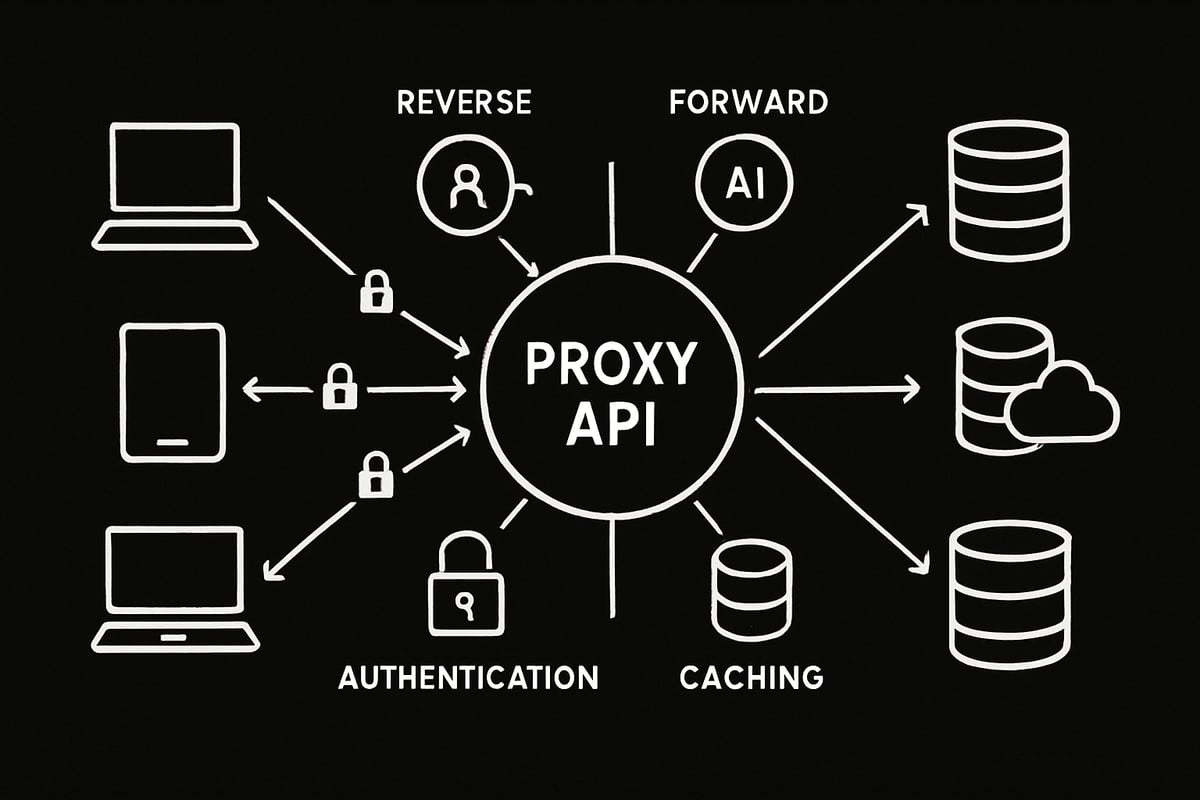
Navigating today’s digital ecosystem means understanding the role of a proxy api. This intermediary layer sits between clients and backend services, abstracting complexity and centralizing access. Unlike traditional APIs that expose backend endpoints directly, a proxy api acts as a controlled gateway, streamlining integrations and enhancing security. In modern SaaS platforms, proxy apis are used to enable secure third-party integrations without exposing sensitive infrastructure.
What is a Proxy API?
A proxy api is a service that acts as a middle layer, handling requests from clients and forwarding them to backend servers. This setup abstracts backend complexity, allowing developers to interact with a unified endpoint. Unlike direct proxies, which simply relay traffic, a proxy api can manage authentication, transform protocols, and enforce policies.
In modern web infrastructure, proxy apis play a vital role in decoupling clients from backend changes. For example, many SaaS platforms deploy an api proxy to enable secure integration with third-party tools, ensuring sensitive data is never exposed directly.
Major Types of Proxy APIs
Proxy apis come in several forms, each tailored to specific scenarios:
- Reverse Proxy APIs: Route client requests to various backend servers, often used for load balancing.
- Forward Proxy APIs: Act on behalf of clients to access external resources, ideal for web scraping or privacy.
- Transparent Proxies: Operate invisibly, commonly for caching or content filtering.
- SSL Proxies: Manage encryption and decryption for secure communications.
- AI Proxies: Specialized middleware for AI and ML workflows, optimizing model selection and cost.
For a deeper dive into these and other types, see the Different Types of Proxies Explained article. AI proxies, for example, are increasingly popular for prompt management and response streaming in enterprise AI applications.
Key Components and Terminology
Understanding a proxy api means knowing its key building blocks:
- Endpoints: The URLs or interfaces exposed to clients.
- Headers: Metadata that travels with each request and response.
- Authentication and Authorization: Methods like OAuth, API keys, or JWTs to control access.
- Rate Limiting: Prevents abuse by capping request frequency.
- Caching and Load Balancing: Improve performance and reliability.
- SSL Termination: Handles encryption at the proxy layer.
- Protocol Transformation: Converts requests between formats.
- Traffic Management: Directs traffic based on rules.
For instance, a proxy api might use OAuth flows and API keys to secure connections, while handling protocol shifts between REST and GraphQL.
How Proxy APIs Work: Step-by-Step
Let’s break down how a proxy api processes a request:
- The client sends a request to a proxy api endpoint, including any necessary headers.
- The proxy api validates the request, checking authentication and permissions.
- Security checks, rate limiting, or caching may be applied.
- The request is then forwarded to the backend API or service.
- The backend processes the request and returns a response to the proxy api.
- The proxy api can transform, log, or cache the response as needed.
- Finally, the proxy api relays the response back to the client.
Here’s a simplified flow:
sequenceDiagram
Client->>Proxy API: Send request with endpoint & headers
Proxy API->>Proxy API: Validate, authenticate, rate limit
Proxy API->>Backend Service: Forward request
Backend Service->>Proxy API: Return response
Proxy API->>Proxy API: Transform, log, cache response
Proxy API->>Client: Relay response
Over 90% of enterprises now use intermediary layers like a proxy api for API management, making this architecture a cornerstone of secure, scalable, and efficient digital services.
Key Use Cases and Benefits of Proxy APIs in 2025
The role of the proxy api is expanding rapidly in 2025, offering solutions that address security, performance, automation, AI integration, and compliance needs. Let's explore the main use cases shaping the future of the proxy api, highlighting why it's an essential tool for businesses and developers alike.
Enhancing Security and Privacy
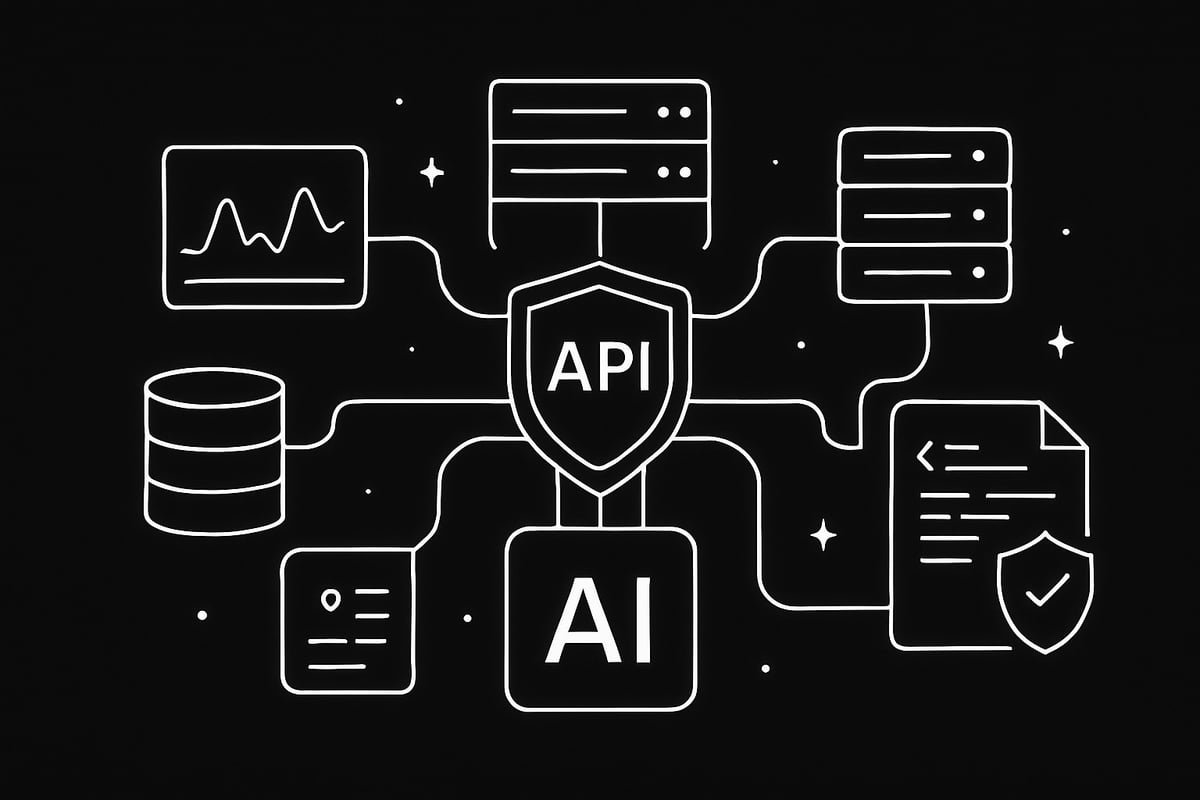
A proxy api acts as a shield between clients and backend services, minimizing direct exposure and reducing attack surfaces. By centralizing access, a proxy api can enforce strict authentication, authorization, and encryption protocols.
For example, businesses often deploy API proxies to manage OAuth flows and API key verification, ensuring only trusted users interact with sensitive endpoints. This approach helps organizations stay compliant as security threats rise each year.
With the proxy api mediating all requests, it's easier to implement data masking, filter malicious traffic, and log access for auditing. The result is stronger privacy for users and more robust protection for business-critical systems.
Performance Optimization and Scalability
Optimizing performance is a core benefit of the proxy api. It can cache frequently requested resources, dramatically reducing response times and server load. This is especially effective for high-traffic applications where milliseconds matter.
A proxy api also balances traffic across multiple backend servers, ensuring no single resource becomes a bottleneck. Protocol transformation features allow seamless communication between modern and legacy systems, making migrations and upgrades smoother.
For instance, reverse proxies are used to integrate with content delivery networks (CDNs), improving latency for global users. The proxy api thus becomes a key component in scaling services efficiently and reliably.
Web Scraping, Automation, and Data Aggregation
The proxy api is indispensable for large-scale web scraping and automation tasks. It enables users to rotate IPs, manage concurrency, and bypass geo-blocks, all while maintaining compliance with target sites' policies.
A common use case is digital marketing, where teams rely on proxy apis to gather real-time data from search engines or social platforms. Mobile proxies, for example, provide access to content restricted by region or device.
By handling request routing, session management, and error retries, a proxy api streamlines complex scraping operations. This empowers businesses to collect and aggregate data efficiently for analytics, market research, and competitive intelligence.
Supporting AI and Next-Gen Applications
Modern AI workflows demand flexible, scalable data access. The proxy api now serves as middleware for prompt routing, response streaming, and intelligent model selection.
Organizations use AI proxies to avoid vendor lock-in, optimize costs, and ensure high availability. Intelligent batching and fallback mechanisms let businesses switch between AI providers seamlessly.
According to Proxy Market Research 2025, 90% of enterprises are adopting AI-driven agents, fueling demand for advanced proxy api features. This trend highlights the growing importance of real-time data access and secure integration in AI-powered environments.
Compliance, Observability, and Developer Experience
A robust proxy api enhances compliance and observability by logging every request and response. Integration with monitoring tools allows real-time tracking of API usage, which is vital for detecting anomalies and meeting regulatory requirements.
Developer experience also improves with features like automated credential generation, developer portals, and onboarding workflows. Service catalogs and documentation become accessible, making it easier for teams to collaborate and innovate.
By centralizing analytics and access controls, the proxy api supports both business and technical stakeholders. It not only meets compliance standards but also accelerates development cycles, fostering a more agile and secure digital environment.
Challenges and Limitations of Proxy APIs
Modern businesses rely heavily on proxy api solutions, but these tools are not without their drawbacks. As organizations scale and diversify their tech stacks, understanding the inherent challenges of proxy api adoption becomes essential. From feature limitations to integration headaches, let's explore the most common obstacles you may encounter.
Feature Gaps Compared to API Gateways
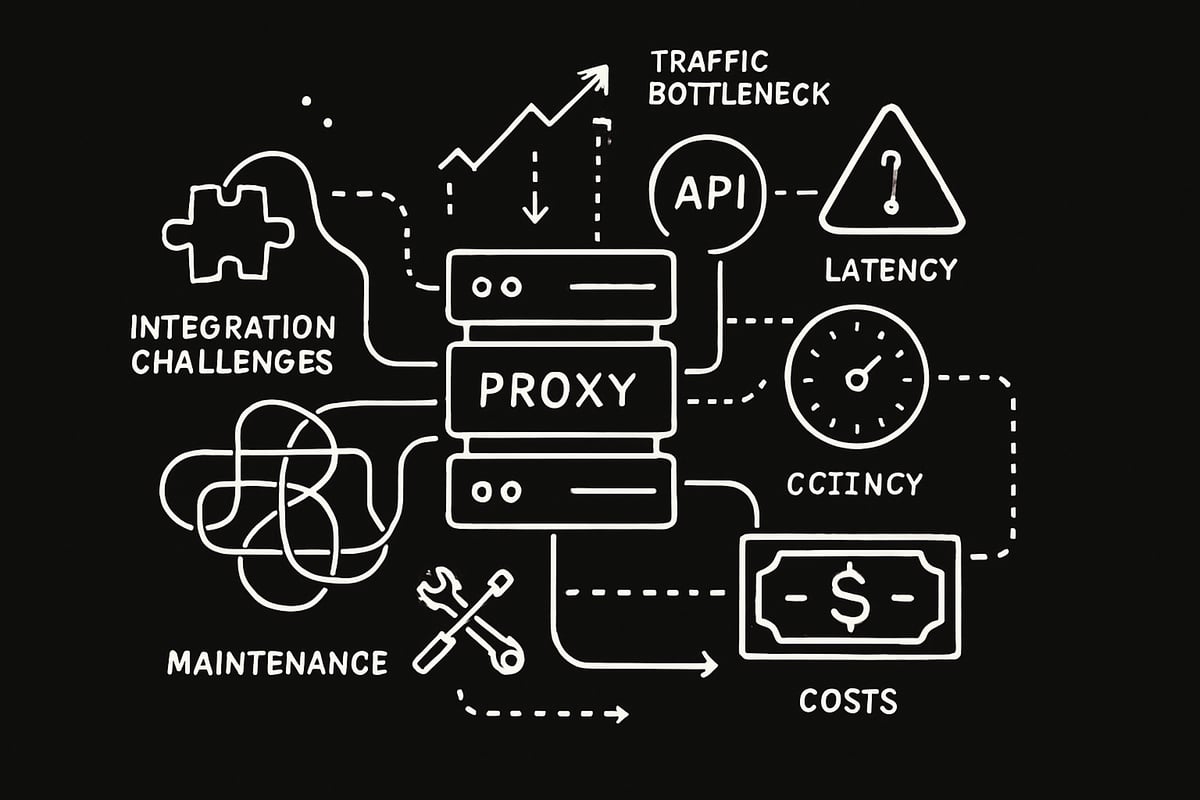
Although a proxy api can centralize traffic and enforce basic security, it often lacks the advanced features found in full-fledged API gateways. API gateways typically offer robust lifecycle management, versioning, and detailed throttling controls.
Proxy api solutions may not include developer portals or tools for API productization, making onboarding and self-service harder. For businesses that need comprehensive management, these gaps can lead to extra development work or the need for additional tooling.
Performance Overhead and Latency
Each proxy api introduces an additional network hop, which can increase latency. When features like response transformation, caching, or SSL termination are enabled, resource consumption rises and throughput can drop.
In high-traffic environments, a proxy api might become a bottleneck, especially if not properly optimized. Organizations must benchmark their proxy api under realistic loads to avoid unexpected slowdowns that impact user experience.
Security Risks and Misconfigurations
While a proxy api can enhance security by obscuring backend infrastructure, improper configuration can expose sensitive data or create vulnerabilities. Basic security features may be insufficient for enterprise-grade protection.
Integration with OAuth or SSO systems is often limited, increasing the risk of mismanaged credentials. Staying ahead of evolving threats is crucial, as highlighted by the Top 8 API Management Trends in 2025, which points to the need for advanced, adaptive security in proxy api deployments.
Complexity in Integration and Maintenance
Integrating a proxy api with your existing authentication, observability, or analytics tools can be complex. Legacy systems may require custom adapters, adding to implementation time.
Ongoing maintenance is another challenge. Regular updates, performance tuning, and monitoring are essential to maintain stability. Common issues include:
- Conflicting authentication protocols
- Logging discrepancies
- Outdated documentation
These hurdles can slow down adoption and increase operational overhead.
Cost and Resource Considerations
The cost of deploying a proxy api varies widely. Open-source options may be free, but enterprise-grade solutions often require licensing fees and dedicated infrastructure.
Here’s a quick comparison:
| Solution Type | Upfront Cost | Ongoing Expenses | Typical Use Case |
|---|---|---|---|
| Open-source proxy api | Low/None | Maintenance, Support | Small teams, hobbyists |
| Enterprise proxy api | High | Licensing, Infra | Large-scale deployments |
Balancing feature requirements with budget constraints is key. Overprovisioning can waste resources, while underinvesting may leave critical gaps.
Best Practices for Selecting and Implementing Proxy APIs
Choosing the right proxy api solution is crucial for ensuring secure, efficient, and scalable data flows in your organization. Let’s break down the essential best practices to help you make informed decisions and achieve seamless implementation.
Evaluating Integration and Compatibility
Start by assessing how well a proxy api aligns with your existing systems. Look for compatibility with current authentication methods, such as OAuth, API keys, or SSO solutions. It’s also vital to ensure smooth integration with observability and analytics tools like Datadog or Prometheus.
If you operate in a containerized environment, verify support for service mesh or Kubernetes. A seamless fit reduces technical debt and streamlines deployment. For practical steps and hands-on guidance, refer to the Proxy API Usage and Setup documentation.
Security Features and Compliance
Security is a top priority when selecting any proxy api. Prioritize solutions offering robust authentication, authorization, and encryption. Compliance with industry standards like GDPR or HIPAA should be non-negotiable, especially if handling sensitive data.
Choose proxies that support advanced security configurations, including TLS termination, IP whitelisting, and audit logging. Regularly update configurations to address new threats and maintain compliance readiness. This proactive approach helps protect both your business and your clients.
Performance, Scalability, and Reliability
Evaluate the performance metrics of each proxy api. Look for benchmarks on latency, throughput, and uptime guarantees. High concurrency support and load balancing are essential for applications dealing with large volumes of traffic.
Consider whether the provider offers features like caching and protocol transformation. Proxies with 99.9% uptime and 10Gbps bandwidth can handle demanding workloads without bottlenecks. Reliable performance keeps your services responsive and users satisfied.
Usability and Developer Experience
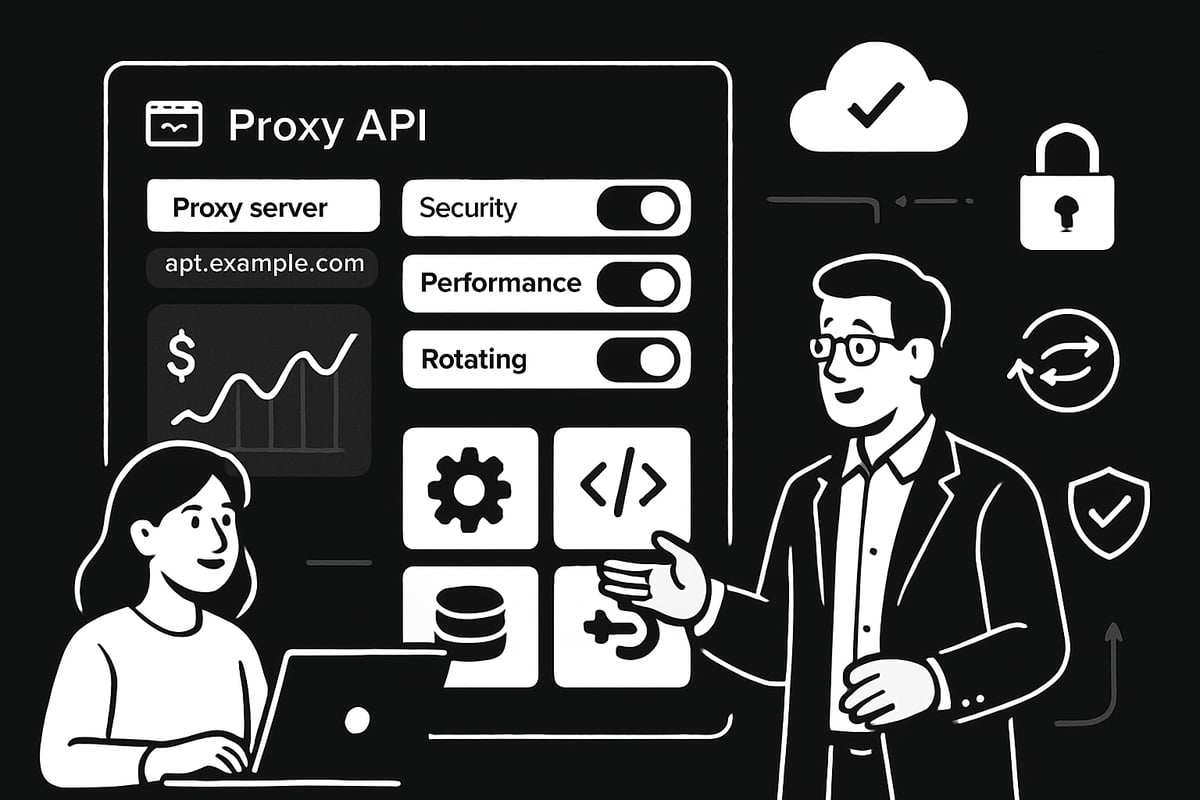
A proxy api should make life easier for your development team. User-friendly dashboards, clear documentation, and automated credential management streamline onboarding. Look for proxies that offer developer portals and intuitive interfaces for managing API keys and monitoring usage.
Integration with CI/CD pipelines and comprehensive error reporting further enhance the developer experience. Prioritizing usability means your team can focus on innovation rather than troubleshooting.
Cost Management and Vendor Selection
Weigh the costs of open-source versus enterprise proxy api solutions. Factor in infrastructure, licensing, and support when calculating total cost of ownership. Some providers offer unlimited access, while others enforce fair use policies.
Balance your feature requirements with budget constraints. Consider starting with a trial or free tier to evaluate real-world performance. Transparent pricing and responsive support are signs of a trustworthy vendor.
Leveraging PinguProxy for High-Performance Proxy API Integration
PinguProxy stands out as a robust proxy api solution for businesses needing speed, reliability, and privacy. With high-speed datacenter and mobile proxies, PinguProxy supports both IPv4 and IPv6, making it ideal for web scraping and automation.
Key features include unlimited IPs, 1ms proxy rotation for enhanced anonymity, and a zero-log policy. The 10Gbps bandwidth and 24/7 customer support deliver reliability for high-demand applications. The user-friendly dashboard and seamless API access simplify integration for marketers, analysts, and privacy-focused users alike.
Future Trends and Innovations in Proxy APIs for 2025 and Beyond
The proxy api landscape is evolving rapidly, with new trends set to transform how businesses manage connectivity, security, and scalability. Let’s explore what’s on the horizon and how these innovations can shape your strategy.
AI-Driven Proxy Management and Optimization
Artificial intelligence is revolutionizing the proxy api space by enabling smarter, adaptive management. AI-driven proxies can automatically route traffic, scale resources, and optimize costs in real time.
These solutions learn from network patterns, adjusting to user demand and preventing congestion. For example, AI can prioritize high-value requests, maintain persistent connections, and even optimize token usage for API calls.
A growing number of businesses are leveraging these capabilities to stay agile. As highlighted in the Top Trends Shaping APIs in 2025, AI-powered automation is becoming a core part of modern API infrastructure, and proxy api solutions are at the forefront of this shift.
Advanced Security and Privacy Enhancements
Security remains a top priority for any proxy api. In 2025, advanced encryption, zero-trust models, and automated threat detection are becoming standard.
Modern proxies now offer zero-log policies, ensuring user privacy and compliance with strict regulations. Automated tools can detect unusual activity, block malicious traffic, and enforce fine-grained access controls.
These enhancements not only protect sensitive data but also build trust with users and partners. Adopting a proxy api with robust security features will help your organization stay ahead of emerging threats and regulatory demands.
Seamless Multi-Cloud and Hybrid Deployments
Businesses are increasingly adopting multi-cloud and hybrid strategies. Proxy api solutions are evolving to support unified access across distributed infrastructures.
Today’s proxies can manage traffic between on-premise data centers, public clouds, and edge environments. This flexibility ensures consistent performance and security, no matter where services are hosted.
Support for Kubernetes and microservices architectures is also growing. A proxy api that integrates seamlessly with these environments can simplify management and accelerate digital transformation.
Developer-Centric Innovations and Self-Service
Developer experience is a key differentiator in the proxy api market. Next-generation proxies offer enhanced portals, self-service onboarding, and automated documentation.
Integration with CI/CD pipelines enables rapid deployment and iterative development. Features like automated credential generation and API catalogs empower teams to innovate faster.
According to Top Trends Shaping APIs in 2025, these developer-centric innovations are essential for organizations seeking agility and scalability with their proxy api solutions.
Regulatory Compliance, Observability, and Analytics
Compliance and transparency are critical for modern proxy api deployments. Built-in audit trails, compliance checks, and advanced analytics are becoming must-have features.
Real-time observability tools help teams monitor traffic, detect anomalies, and ensure policy enforcement. Integration with compliance frameworks like GDPR and HIPAA is now standard for enterprise-grade proxies.
As outlined in The API Economy: Key Trends and Innovations for 2025, embedding compliance directly into proxy api workflows future-proofs your operations and reduces risk.
Step-by-Step Guide: Implementing a Proxy API in 2025
Implementing a proxy api in 2025 requires a methodical approach, blending technical precision with strategic planning. Follow this actionable, step-by-step guide to ensure your proxy api deployment is secure, scalable, and future-proof.
Step 1: Define Use Case and Requirements
Start by clearly outlining the purpose of your proxy api. Are you aiming to enhance security, enable web scraping, automate workflows, or support AI integration? Specify which features are non-negotiable, such as rate limiting, IP rotation, protocol support, or logging.
Create a checklist of your must-have requirements. For instance, if your main goal is web scraping for competitive intelligence, you will need a proxy api that supports fast IP rotation and geo-targeting.
If you are new to proxies, the Beginner's Guide to Proxies can help you grasp the fundamentals before diving into technical implementation.
Step 2: Select the Right Proxy API Solution
Evaluate available proxy api solutions, considering both open-source tools and commercial vendors. Focus on compatibility with your existing tech stack, scalability for future growth, and regional coverage if you need access to specific geolocations.
Compare features like bandwidth limits, IP pool size, and support offerings. Consider creating a table to summarize your findings:
| Solution | IP Types | Bandwidth | Support | Cost |
|---|---|---|---|---|
| Vendor A | Datacenter | 5Gbps | 24/7 | $$$ |
| Vendor B | Mobile, DC | 10Gbps | Business Hrs | $$ |
When choosing between datacenter and mobile proxies, weigh your performance needs against privacy requirements.
Step 3: Configure Authentication and Security
Protect your proxy api with strong authentication protocols. Set up API keys, OAuth 2.0, or Single Sign-On (SSO) to ensure only authorized users can access your resources.
Encrypt all data in transit using SSL/TLS. Apply access control rules to restrict sensitive endpoints. Integrate your proxy api with enterprise Identity and Access Management (IAM) systems for centralized governance.
For example, to set up OAuth with your proxy api, you might use:
auth:
  type: oauth2
  token_url: https://your-oauth-provider.com/token
  scopes:
    - api.read
    - api.write
Step 4: Integrate with Existing Systems
Connect your proxy api to backend services, databases, or analytics platforms. Ensure seamless compatibility with your current infrastructure, whether it is cloud-native, on-premise, or hybrid.
Leverage microservices or Kubernetes environments for flexible scaling. Use service discovery tools to automate endpoint management. Test integrations thoroughly to confirm smooth data flow across all components.
Integration with observability stacks enables real-time monitoring and troubleshooting. Document your integration process to streamline future updates or migrations.
Step 5: Optimize Performance and Scalability
Maximize the efficiency of your proxy api by implementing caching for frequently accessed data and distributing traffic with load balancers. Set up rate limiting to prevent abuse and ensure fair resource allocation.
For advanced use cases, leverage features like IP rotation to avoid detection and maintain high concurrency. The Advanced Proxy Features and IP Rotation guide offers practical tips for scaling your proxy api and maintaining top performance.
Monitor latency and throughput, adjusting resources as demand fluctuates. Plan for peak traffic events by expanding your proxy pool proactively.
Step 6: Monitor, Analyze, and Maintain
Deploy observability tools to track proxy api health, response times, and error rates. Set up automated alerts for anomalies, such as unexpected spikes in usage or security threats.
Regularly analyze usage logs to ensure compliance with internal and external policies. Schedule maintenance windows for updates and patches, minimizing downtime.
Keep documentation up-to-date and educate your team on best practices. Proactive monitoring helps you identify and resolve issues before they impact users.
Step 7: Iterate and Innovate
Gather feedback from developers and end-users to understand how your proxy api meets real-world needs. Use this input to refine configurations, expand features, or introduce automation.
Stay informed about the latest trends in proxy api technology, such as AI-driven management or emerging security protocols. Experiment with new features as they become available, and adapt your implementation to evolving business goals.
Continuous iteration ensures your proxy api remains resilient, efficient, and aligned with organizational priorities.Now that you have a solid understanding of how Proxy APIs are shaping digital privacy, performance, and innovation for 2025, why not put these insights into action? Whether you are looking to streamline your data projects, boost security, or access global content, a high-speed, reliable proxy solution can make all the difference. With PinguProxy’s powerful features and user-friendly tools, you can start building smarter, more secure applications today. Ready to take the next step on your API journey? Start Building with Our API