
Residential Proxy Guide: Everything You Need to Know in 2025
Did you know millions of online users rely on a residential proxy for privacy, data collection, and unrestricted access to the web? In 2025, these tools are more vital than ever, helping individuals and businesses bypass barriers and stay secure.
This guide breaks down everything about residential proxy technology—from how it works and its real-world benefits to key use cases and choosing the best provider. You'll gain practical tips for safe, effective usage and get a clear view of the latest trends.
Ready to unlock secure browsing and smarter data access? Dive in and make informed choices for the year ahead.
What Are Residential Proxies?
Understanding the basics of a residential proxy is key for anyone looking to browse safely, collect data, or bypass restrictions online in 2025. These proxies have become central to secure, efficient online operations—let’s break down exactly what they are, how they function, and why they’re so valuable.

Definition and Core Concepts
A residential proxy is an intermediary server that routes your internet requests through IP addresses assigned to real devices by internet service providers. Unlike datacenter proxies, which use synthetic IPs from cloud servers, or mobile proxies relying on cellular networks, residential proxy IPs originate from actual homes. This makes your traffic appear as if it’s coming from a regular user, enhancing authenticity.
For example, if you want to access geo-blocked streaming content from another country, a residential proxy allows you to do so undetected. The global scale is impressive, with leading providers like Bright Data and Webshare.io offering between 30 million and 150 million residential IPs. This “human-like” browsing experience helps you avoid detection and bans. If you’re looking for foundational knowledge on these concepts, check out the Beginner's guide to proxies.
How Residential Proxies Work
When you use a residential proxy, your requests are routed through real users’ devices, making websites see you as a legitimate visitor. Technically, you can choose between sticky sessions—keeping the same IP for a set time—or rotating sessions, which change your IP with each request. This flexibility allows for both persistent logins and high-anonymity browsing.
A residential proxy masks your true IP address, boosting your online anonymity. Top providers ethically source their IPs, with users opting in to share them. For instance, when scraping e-commerce data, using a residential proxy network lets you collect information without being blocked or flagged as a bot.
Key Benefits of Residential Proxies
A residential proxy unlocks the web by helping you bypass geo-restrictions and website blocks. Thanks to real-device IPs, you enjoy higher success rates—some networks boast up to 99.97% uptime. This superior anonymity is especially valuable compared to datacenter proxies, which are more easily detected.
Key benefits include:
- Access to restricted content worldwide
- Reliable web scraping and ad verification
- Enhanced privacy for market research
- Trusted by Fortune 500 companies and global enterprises
With a residential proxy, businesses and individuals gain the tools needed for secure data collection and untraceable browsing.
Residential Proxy Network Scale and Coverage
Residential proxy networks now span 195+ countries, providing millions of IPs for broad targeting. For example, the United States alone offers over 10 million IPs, Brazil 5 million, and India 4 million, along with extensive pools in the UK, Germany, and China.
This vast, diverse network enables precise targeting by city, state, ZIP code, or ASN, ensuring reliability and performance. Leading competitors showcase network sizes like Bright Data’s 150 million+ IPs and Webshare.io’s 80 million+. The sheer scale of residential proxy coverage is what makes them so effective for modern online tasks.
Main Use Cases and Applications in 2025
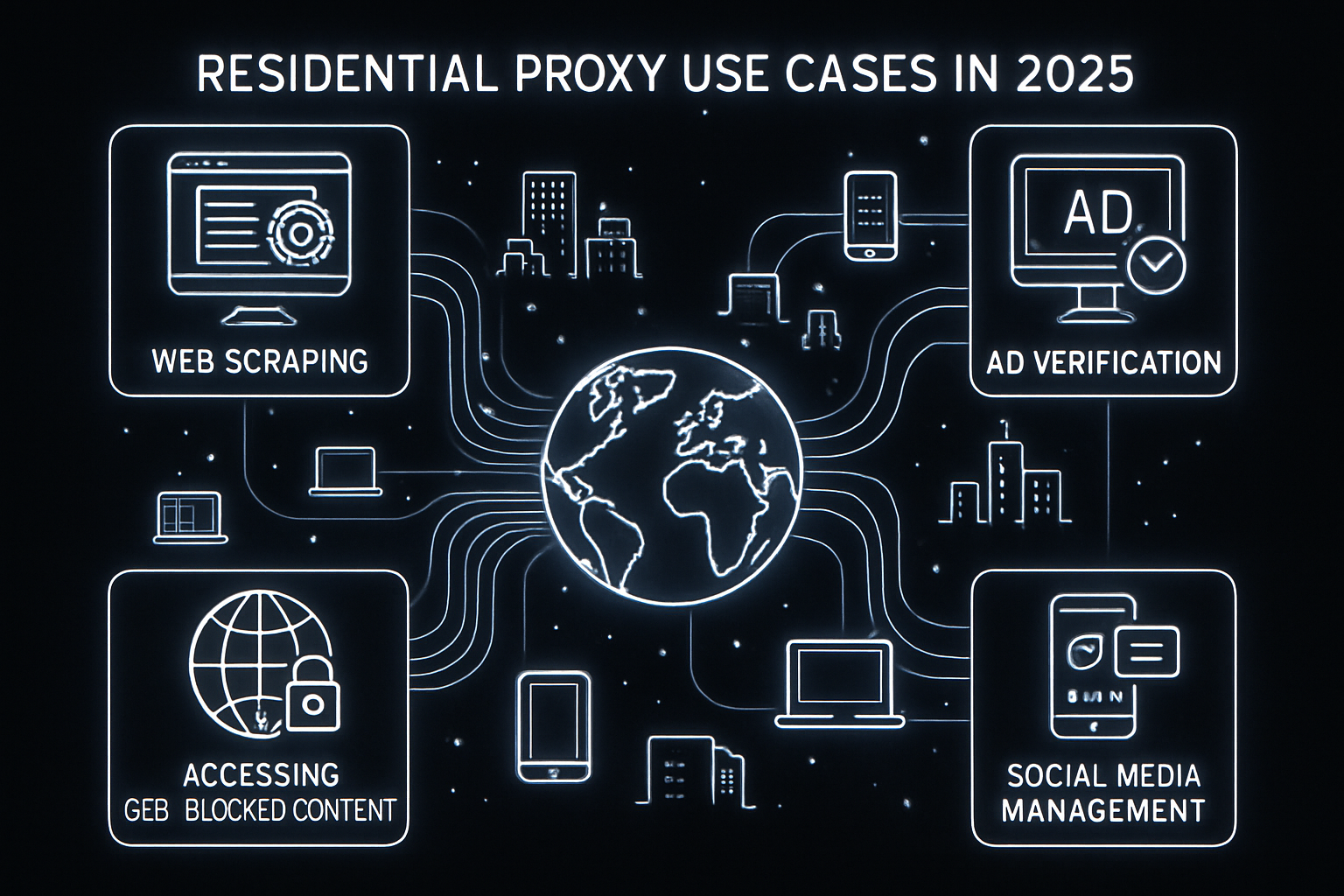
As digital landscapes evolve, the residential proxy has emerged as a versatile tool for businesses and individuals needing reliable, anonymous access to the open web. In 2025, its applications span industries, from data-driven startups to global enterprises. Let’s explore the core ways a residential proxy is shaping online strategies.
Web Scraping and Data Collection
Automated data collection is at the heart of modern business intelligence. Companies use a residential proxy to extract public web data without detection, powering price monitoring, competitor analysis, and AI model training. By rotating IPs, users avoid bans and CAPTCHAs, ensuring seamless scraping.
For example, e-commerce firms track global pricing trends using residential proxies to access region-specific content. This approach delivers unmatched performance and reliability, making it essential for large-scale projects. For an in-depth look at techniques and compliance, see the Complete guide to web scraping 2025.
Ad Verification and Brand Protection
Digital advertising faces constant threats from fraud and unauthorized placements. Using a residential proxy, brands verify that their ads appear correctly across different locations and devices. This ensures campaign integrity and helps detect fraudulent activity.
Billions are lost to ad fraud each year, but residential proxies simulate real user behavior, revealing hidden issues that datacenter proxies might miss. Global enterprises rely on this technology to safeguard their reputation and maximize advertising ROI.
Accessing Geo-Restricted Content and Market Research
Many websites and services restrict access based on user location. With a residential proxy, users can unlock geo-blocked content for streaming, bookings, or retail platforms. This capability is crucial for market researchers and QA teams testing localized offers.
For instance, marketers use residential proxies to analyze pricing differences across 195+ countries, gaining insights into regional trends. The ability to target by city or ZIP code makes this tool invaluable for businesses seeking precise, localized data.
Social Media Management, Automation, and Other Uses
Managing multiple social media accounts is challenging due to strict platform policies. A residential proxy allows marketers and agencies to automate tasks, schedule posts, and engage with audiences without risking bans.
Beyond social media, residential proxies support cybersecurity testing, SEO monitoring, and even sneaker copping. In 2025, automation and multi-account workflows have expanded, with proxies enabling secure, scalable operations for diverse online activities.
Types of Residential Proxies and Key Features
Choosing the right residential proxy means understanding the different types and how they match your needs. Each option offers unique features, protocols, and performance benchmarks, making it essential to know what sets them apart.
Rotating vs. Sticky Residential Proxies
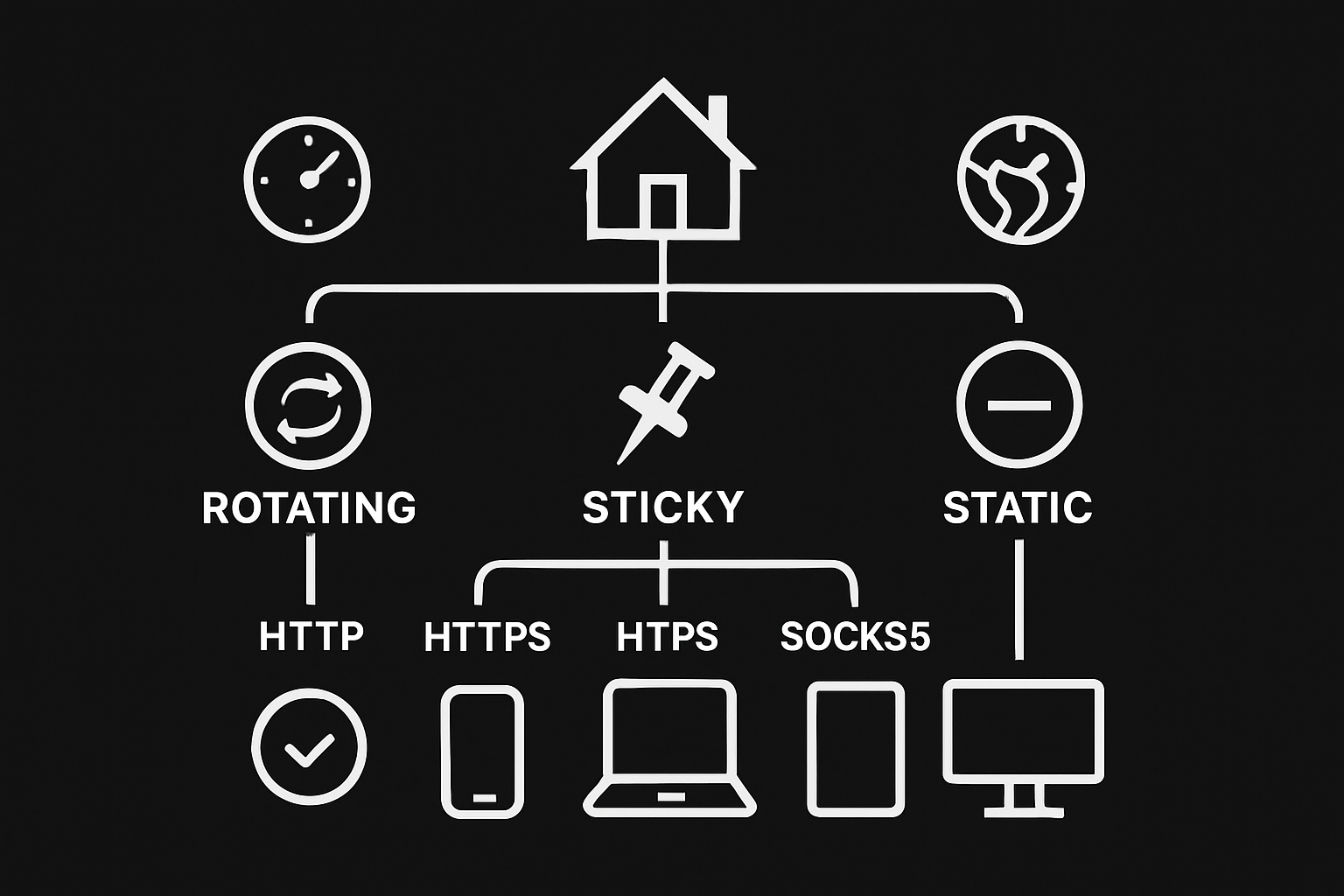
The two most common types are rotating and sticky residential proxies. Rotating proxies assign a new IP address for every connection or request, maximizing anonymity and reducing detection risk. Sticky proxies keep the same IP for a set time, which is vital for activities like maintaining sessions or managing accounts.
| Feature | Rotating Proxy | Sticky Proxy |
|---|---|---|
| IP Change | Every request/session | Fixed duration |
| Best For | Web scraping, anonymity | Account management |
| Detection Risk | Very low | Low |
When comparing proxy types, it's helpful to review resources like Types of proxy servers explained. This can help you determine whether a rotating or sticky residential proxy is best for your use case.
Static Residential Proxies
A static residential proxy gives you a real residential IP that remains unchanged for as long as you need. This is perfect for tasks where a persistent digital identity is crucial, such as account creation or secure logins.
Static proxies are rarer and priced higher due to their stability and scarcity. Providers like Webshare.io offer static residential proxy options for users needing long-term access. If you require a stable, trusted IP for sensitive operations, static proxies can be the right fit.
Protocol Support: HTTP, HTTPS, SOCKS5
Residential proxy services typically support a range of protocols:
- HTTP/HTTPS: Ideal for web browsing, scraping, and data collection.
- SOCKS5: Offers greater flexibility for streaming, gaming, or applications beyond browsers.
For instance, to use an HTTP proxy in Python:
proxies = {'http': 'http://user:pass@proxy:port'}
SOCKS5 support enables compatibility with a wider array of tools. The right protocol affects both security and speed, so choose based on your application and provider features.
Performance Metrics and Reliability
A reliable residential proxy network is defined by high uptime, fast speeds, and strong infrastructure. Top providers advertise uptimes up to 99.97% and bandwidth reaching 10Gbps, supporting unlimited concurrent sessions and threads.
Large IP pools and ethical sourcing ensure your requests remain undetected. Enterprise users, including Fortune 500 companies, depend on these metrics for mission-critical operations. When selecting a provider, performance and reliability should be at the top of your checklist.
How to Choose the Right Residential Proxy Provider in 2025
Selecting the best residential proxy provider in 2025 can feel overwhelming with so many options on the market. To make an informed choice, it’s crucial to weigh features, pricing, security, and support. The right provider will empower your projects with reliable access, speed, and peace of mind.
Essential Evaluation Criteria
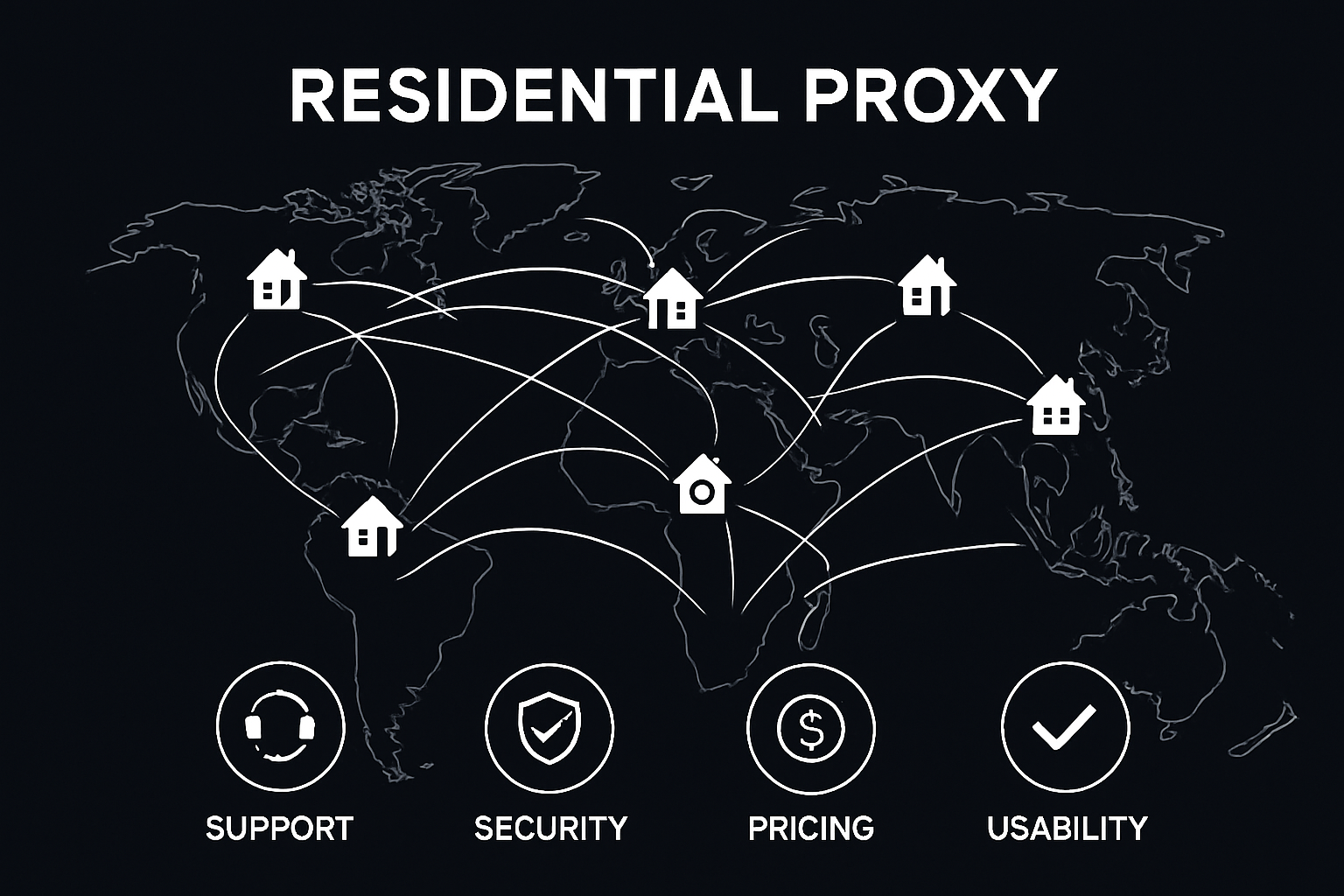
When comparing residential proxy providers, prioritize these core factors:
- IP Pool Size & Diversity: Look for millions of IPs spanning 195+ countries for flexible targeting.
- Uptime & Speed: Reliable networks offer 99.7% - 99.97% uptime and fast response times.
- Ethical Sourcing: Ensure IPs are opt-in and providers comply with legal standards.
- Transparent Pricing: Clear, upfront billing avoids surprises.
- Customer Support: 24/7 assistance and comprehensive documentation make a big difference.
Consulting resources like the Best Residential Proxy Service Providers of 2025 can help you compare features, reviews, and reputations side by side.
Pricing Models and Cost Factors
Residential proxy services typically offer two main pricing models:
- Pay-as-you-go: Pay only for what you use, ideal for small projects.
- Subscription Plans: Monthly or annual, often with volume discounts for enterprises.
Pricing is usually based on bandwidth ($1.4 - $8/GB), the number of IPs, or both. Some providers offer free trials or money-back guarantees for risk-free testing. Compare plans carefully, as higher costs can reflect better network quality or exclusive features.
Choosing a residential proxy with the right balance of price and quality ensures you don’t overspend while meeting your project’s demands.
Security, Privacy, and Ethical Considerations
Security and ethics are non-negotiable when choosing a residential proxy. Reputable providers maintain strict zero-log policies, safeguarding your browsing and data. Always verify that a provider sources IPs with user consent and complies with international regulations.
Opt for a residential proxy that’s transparent about its practices. Avoid services with unclear origins or suspiciously low prices, as these can expose you to malware or data leaks. Leading companies like Bright Data set the gold standard by prioritizing ethical sourcing and privacy protection.
Integration, Usability, and Support
A user-friendly residential proxy provider offers:
- Easy Management: Intuitive dashboards and robust APIs.
- Developer Resources: Code samples for Python, Java, Node.js, and more.
- Software Compatibility: Seamless integration with browsers, scrapers, and automation tools.
- Responsive Support: 24/7 help ensures smooth onboarding and troubleshooting.
These features make deploying and managing proxies simple, whether you’re a solo entrepreneur or a large enterprise. Look for providers with strong reputations for customer care and technical documentation to maximize your experience.
Setting Up and Using Residential Proxies: Step-by-Step Guide
Setting up a residential proxy may sound technical, but it’s straightforward with the right guidance. Whether you’re a business user or a privacy-conscious individual, following these steps helps you unlock the full potential of residential proxy networks while maintaining security and compliance.
Step 1: Selecting a Provider and Plan
Begin your residential proxy journey by assessing your needs. Are you focusing on web scraping, ad verification, or simply bypassing geo-blocks? Identify the countries, bandwidth, and session types you require.
Compare providers based on:
- IP pool size and diversity
- Pricing structure (bandwidth or IP-based)
- Uptime and performance guarantees
- Ethical sourcing and transparency
Sign up with your chosen provider and complete any verification steps. Many reputable residential proxy services offer free trials or demo accounts, making it easy to test features before committing. Prioritize providers with strong reputations for reliability and ethical operation.
Step 2: Configuring Proxy Settings
Once you’ve set up your residential proxy account, access your dashboard to obtain credentials like username, password, and proxy endpoints. Choose your preferred protocol—HTTP, HTTPS, or SOCKS5—based on your application’s needs.
Set up the residential proxy in your browser, automation tool, or custom script. For example, in Python’s requests library:
proxies = {
    'http': 'http://username:password@proxy_ip:port',
    'https': 'https://username:password@proxy_ip:port'
}
Test connectivity and troubleshoot common issues, such as authentication errors or blocked ports. Most providers offer guides and code samples to streamline setup, making it simple to integrate residential proxy access into your workflow.
Step 3: Testing and Optimizing Performance
Verifying your residential proxy is working correctly is crucial for optimal results. Start by checking your IP address using services like geo.brdtest.com to confirm location masking and anonymity.
Monitor performance by:
- Testing connection speed and latency
- Rotating IPs or sessions for target-specific tasks
- Tracking bandwidth usage and concurrent sessions
Adjust your settings if you encounter slow speeds or site blocks. Optimize thread counts and rotation intervals for your use case. Consistent monitoring ensures your residential proxy delivers the speed, reliability, and stealth you expect for web scraping or automation.
Step 4: Best Practices for Security and Compliance
Using a residential proxy responsibly is essential for staying safe and compliant. Always operate within legal boundaries, respect website terms, and avoid activities like fraud or unauthorized data access.
Keep these best practices in mind:
- Use strong, unique credentials
- Monitor account activity for anomalies
- Stay current with provider policies and regional laws
For further guidance, review ethical proxy usage best practices. Choosing reputable providers and following ethical standards will help you maximize the benefits of your residential proxy while minimizing risks to privacy and security.
Trends, Innovations, and the Future of Residential Proxies in 2025
The residential proxy landscape is evolving rapidly as we move into 2025. From powering AI to meeting the demands of global businesses, innovation is reshaping how organizations leverage these tools. Let’s break down the top trends shaping the future of the residential proxy market.
Growth of AI, Automation, and Data-Driven Use Cases
AI and automation are fueling unprecedented demand for residential proxy solutions. Companies need massive, diverse web data to train large language models, monitor markets, and drive business intelligence.
Residential proxy networks allow seamless, large-scale data collection without triggering anti-bot systems. This capability is critical for AI projects, especially as data requirements skyrocket. Automation tools use proxies to conduct market research, cybersecurity audits, and targeted marketing—tasks that would be impossible at scale without reliable proxies.
Industries from e-commerce to finance increasingly depend on residential proxy networks for competitive insights. As AI adoption grows, expect proxy use cases to diversify even further in 2025.
Advances in Proxy Technology and Performance
Technological innovation is redefining what’s possible with residential proxy services. Modern networks now support protocols like QUIC and HTTP/3, enabling faster, more stable connections. Providers are rolling out unlimited concurrent sessions, high bandwidth (up to 10Gbps), and instant IP rotation for stealthy, high-performance browsing.
Enhanced targeting—down to the city, ZIP code, or ASN—gives users granular control. Some leading providers now claim average response times under a second, making residential proxy usage nearly indistinguishable from real human browsing. For a deeper dive into these breakthroughs, check out Proxy Trends and Innovations in 2025.
Expect further improvements in speed, reliability, and integration, as proxy technology keeps pace with rising business and AI demands.
Evolving Threats and Anti-Detection Measures
With smarter anti-bot systems and evolving CAPTCHAs, the residential proxy industry faces new challenges. Providers are investing in better IP quality, smarter rotation, and ethical sourcing to stay ahead of detection algorithms.
Enterprise-grade solutions now promise uptimes as high as 99.99%. These advancements help users avoid blacklisting and ensure uninterrupted access to global data sources. Ethical sourcing and compliance are more important than ever, as regulators and platforms scrutinize proxy traffic.
Users must stay aware of these shifts to ensure their residential proxy strategies remain effective and compliant in an ever-changing threat landscape.
The Expanding Global Proxy Market
The global residential proxy market is booming, with IP pools now exceeding 80 million worldwide. More regions and ISPs are being added, allowing truly global coverage. Increased competition is driving innovation and making entry-level plans more affordable than ever.
Enterprises and small businesses alike benefit from broader geographic reach and higher reliability. For an in-depth look at market size and growth projections, see the Residential Proxy Server Market Analysis.
As digital privacy and accessibility become universal concerns, residential proxy networks will play a pivotal role in shaping the open web of 2025.Now that you know what residential proxies are and how they can power everything from secure browsing to seamless data collection, you’re ready to take your next step. Whether you want to unlock geo-restricted content, automate your workflows, or just browse safely in 2025, choosing the right provider makes all the difference. With PinguProxy’s fast, reliable, and privacy-focused proxies—plus unlimited access and 24/7 support—you have everything you need to get started with confidence. If you’re ready to put this guide into action, Get Started Now and see what a powerful proxy network can do for you.