
4G Mobile Proxy Guide: Everything You Need to Know (2025)
Ever wondered how experts bypass geo-restrictions, verify ads, and scrape the web without getting blocked? The answer in 2025 is the 4g mobile proxy. As the digital landscape gets tougher, modern businesses and marketers need new ways to stay anonymous and effective online.
This guide will break down what makes a 4g mobile proxy so powerful, how it works, its key advantages, and why it’s the go-to solution for privacy and automation. Ready to unlock the secrets behind seamless online operations? Let’s dive in.
What Are 4G Mobile Proxies?
If you’ve ever wondered how people manage to scrape websites, verify ads, or bypass regional blocks without getting caught, the answer often lies with the 4g mobile proxy. This technology is a game changer in 2025, and understanding what sets it apart is crucial for anyone relying on reliable, undetectable proxies.
Definition and Core Technology
A 4g mobile proxy is a gateway that routes your internet requests through a real mobile device connected to a 4G/LTE network. Unlike datacenter proxies, which use fabricated IPs, or residential proxies, which use static home IPs, a 4g mobile proxy leverages genuine mobile IP addresses assigned by cellular carriers. This makes your traffic appear as if it’s coming from a regular smartphone user.
Cellular carriers play a major role by dynamically assigning authentic IPs to connected devices. Proxy providers set up infrastructure that connects your requests to these devices, making detection much harder. As a result, websites see traffic from a real mobile network, not a server farm or fixed residential address.
In 2025, the distinction between 4g and 5g proxies is sharper than ever. While 5G proxies offer higher speeds and lower latency, 4g mobile proxy solutions remain highly valued for their vast coverage and stable connections. For example, when using a 4g mobile proxy, your IP can rotate every few minutes, providing a fresh, carrier-grade IP that’s nearly impossible to blacklist.
The global pool of 4g proxies is estimated to include millions of IPs, spanning almost every country. This widespread coverage ensures that users can access region-specific content without drawing suspicion. For a more in-depth breakdown of how mobile proxies differ from other types, check out this Mobile proxies explained guide.
Types of Mobile Proxies
There are several categories of 4g mobile proxy options, each designed for distinct needs. The two primary types are dedicated and shared proxies. Dedicated proxies give you exclusive use of a mobile IP, making them ideal for sensitive tasks like managing multiple social media accounts where reputation matters. Shared proxies, on the other hand, are more budget-friendly and suitable for less critical applications, as multiple users access the same IP.
Another key distinction is between rotating and static proxies. Rotating proxies automatically assign a new IP at set intervals or per request, maximizing anonymity and reducing the risk of blocks. Static proxies keep the same IP for longer periods, which can be useful if you need a consistent identity online.
Here’s a quick comparison:
| Type | Best For | Pros | Cons |
|---|---|---|---|
| Dedicated | Social media, e-commerce | Exclusive, reliable | Higher cost |
| Shared | Web scraping, ad verification | Affordable, wide access | Possible overlap |
| Rotating | Automation, scraping | High anonymity, less bans | May disrupt sessions |
| Static | Account management | Consistent identity, stable | Easier to block |
Regions like the US, UK, and parts of Asia offer the most reliable 4g mobile proxy networks, thanks to robust carrier infrastructure. For example, social media managers often use dedicated proxies to safely run multiple campaigns without risking account bans.
How 4G Mobile Proxies Work
Let’s break down the process. When you send a request through a 4g mobile proxy, it first travels to the proxy server. The server then forwards your request to a real mobile device connected to a carrier’s 4G network. The device accesses the target website, and the response is sent back to you via the proxy server.
IP rotation is a key feature. Many providers offer rotation every few minutes or on every request, making your activity blend in with normal mobile traffic. This high-frequency rotation dramatically improves anonymity.
Imagine you’re scraping prices from an e-commerce site. With a 4g mobile proxy, each request appears to come from a different mobile user, drastically lowering your chances of getting blocked. This seamless routing and rotation are why the 4g mobile proxy remains the gold standard for privacy-focused automation in 2025.
Key Advantages of 4G Mobile Proxies in 2025
Unlocking the full potential of the internet in 2025 requires more than just a proxy - it demands a 4g mobile proxy. Let’s break down the core benefits driving their explosive adoption, from rock-solid privacy to seamless access and unbeatable speed.
Enhanced Anonymity and Security
A major advantage of the 4g mobile proxy is its ability to mimic genuine user behavior. Since requests are routed through real mobile devices using carrier IPs, websites see traffic as coming from authentic smartphone users.
This drastically reduces detection and blocking, especially when compared to datacenter or residential proxies. Zero-log policies further protect your privacy, ensuring no trace of your browsing or data collection activities.
For a deeper dive into how mobile proxies outperform other types in stealth and privacy, check out this Proxy types comparison guide.
Real-world example: Digital marketers rely on 4g mobile proxy networks to verify ads without risking bans or revealing their true IPs.
Bypassing Geo-Restrictions and CAPTCHAs
A 4g mobile proxy is a powerful tool for bypassing regional content blocks and defeating CAPTCHAs. By leveraging genuine mobile IPs from specific countries, users can access streaming, gaming, and shopping sites otherwise restricted by location.
Most anti-bot and anti-fraud systems find it difficult to distinguish 4g mobile proxy traffic from real users, leading to higher success rates. On average, industry sources report up to 92% success in bypassing CAPTCHAs and geo-blocks with these proxies.
Whether you’re trying to access exclusive content or conduct market research, the 4g mobile proxy makes it possible without the hassle of repeated verifications.
High Success Rates for Automation and Scraping
The 4g mobile proxy excels in web scraping, sneaker copping, and social media automation. Its rotating mobile IPs mean fewer bans, less downtime, and smoother data extraction.
For example, e-commerce analysts use 4g mobile proxy services to monitor prices and stock levels across multiple sites - tasks that would trigger blocks with traditional proxies.
Automated bots running on a 4g mobile proxy can manage dozens of social accounts or collect market intelligence at scale, giving businesses a competitive edge.
Speed, Reliability, and Uptime
Speed and uptime are critical for anyone relying on proxies for business or research. The 4g mobile proxy consistently delivers high-speed connections, with average download speeds exceeding 50 Mbps and latency as low as 30 ms in 2025.
Here’s a quick comparison:
| Proxy Type | Avg. Speed (Mbps) | Uptime Guarantee |
|---|---|---|
| 4G Mobile Proxy | 50+ | 99.9% |
| Datacenter Proxy | 100+ | 99.5% |
| Residential Proxy | 20-40 | 99.0% |
Thanks to robust carrier networks and advanced proxy infrastructure, the 4g mobile proxy offers nearly uninterrupted service, essential for time-sensitive operations.
Scalability and Flexibility
One standout feature of the 4g mobile proxy is its scalability. Businesses can rotate through thousands of real mobile IPs, scaling operations as needed, whether for a small campaign or enterprise-level automation.
Rotating proxies allow users to handle multiple concurrent connections, while flexible plans accommodate diverse needs. Both startups and large organizations benefit from the agility and reach that a 4g mobile proxy provides.
With these advantages, the 4g mobile proxy stands out as the top choice for privacy, access, speed, and growth in 2025.
Top Use Cases for 4G Mobile Proxies
Unlocking the full power of a 4g mobile proxy can transform how you gather data, manage accounts, and protect your online presence. Let’s dive into the most impactful use cases where this technology leads the way in 2025.
Web Scraping and Data Mining
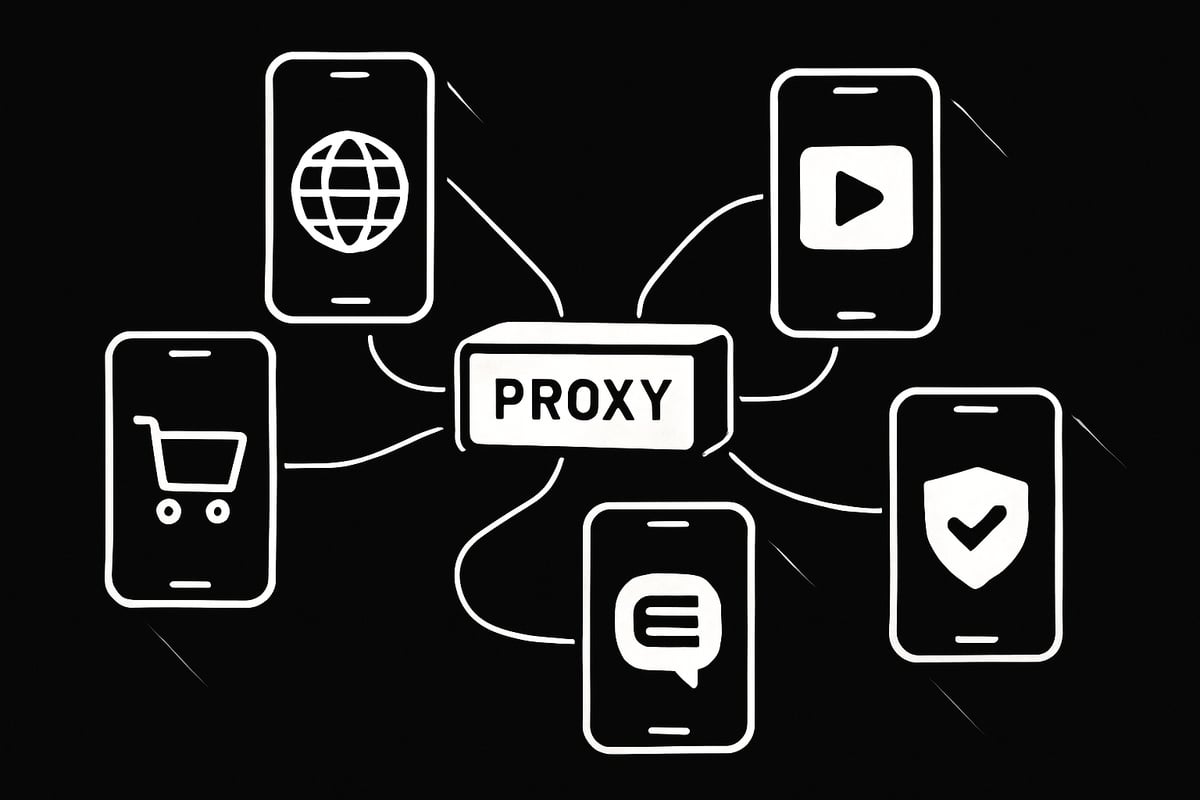
Web scraping has evolved rapidly, and a 4g mobile proxy is now a must-have for undetectable data extraction. By routing requests through real mobile IPs, you appear as a genuine user, minimizing blocks and CAPTCHAs.
For example, companies use 4g mobile proxy solutions to scrape competitor pricing, monitor trends, and collect public sentiment without detection. This approach is invaluable for market research and competitor analysis.
If you want to dive deeper into successful strategies, the Complete web scraping guide 2025 offers step-by-step advice tailored for modern proxy use.
Social Media Management and Automation
Managing multiple social media accounts is challenging due to strict platform restrictions. Using a 4g mobile proxy lets agencies and marketers automate posting, schedule content, and switch between accounts safely.
This technology helps prevent shadowbans and account lockouts by mimicking real user behavior. For instance, a social media agency scaled campaigns for dozens of brands without interruption, thanks to reliable IP rotation and mobile authenticity.
Ad Verification and Fraud Prevention
Digital ad ecosystems are rife with fraud and misreporting. A 4g mobile proxy allows ad tech companies to verify ad placements, detect click fraud, and ensure that geo-targeted ads display correctly.
By accessing sites with a genuine mobile IP, you can see exactly what real users see. This transparency is crucial for campaign audits, as it helps identify discrepancies and maintain trust with clients.
Accessing Geo-Restricted Content
Streaming services, gaming platforms, and news sites often limit access based on location. With a 4g mobile proxy, you can bypass these restrictions easily.
Picture a user wanting to watch a regional sports event or access exclusive content. By connecting through a proxy in the right country, the door opens to previously blocked material - no more frustrating “content unavailable” messages.
E-commerce and Price Monitoring
Retailers frequently use dynamic pricing and limit data collection from competitors. A 4g mobile proxy helps businesses track prices, monitor inventory, and analyze competitor strategies in real time.
Because these proxies rotate IPs and use real mobile addresses, they drastically reduce the risk of bans during rapid data collection. This is especially important during high-traffic sales events when speed and stealth are critical.
Cybersecurity and Privacy Protection
Protecting sensitive research or investigative work demands strong online privacy. By masking your real IP with a 4g mobile proxy, you shield your identity and browsing activity from prying eyes.
This added layer of security is vital for journalists, researchers, and anyone handling confidential information. It ensures your digital footprint remains hidden, safeguarding both data and reputation.
How to Choose the Best 4G Mobile Proxy Provider
Choosing the right 4g mobile proxy provider can make or break your success in web scraping, automation, or privacy protection. With so many options in 2025, it’s vital to know what to look for - otherwise, you risk wasted time, money, and even your project’s reputation.
Key Selection Criteria
The most important factor in selecting a 4g mobile proxy is the provider’s IP pool. Look for large, diverse pools spanning multiple countries and carriers. This ensures you get fresh, undetectable IPs for every request.
Speed and bandwidth matter. A top-tier 4g mobile proxy should offer high-speed connections that don’t bottleneck your tasks. Check for transparent speed benchmarks and uptime guarantees - industry leaders typically promise 99.9% uptime.
Security is another must-have. Choose providers with zero-log policies and robust encryption. Flexible IP rotation options - both automatic and manual - help maximize privacy and minimize bans.
Support can’t be overlooked. Responsive, 24/7 customer support is essential, especially for time-sensitive projects. Finally, compare pricing models: pay-as-you-go is great for occasional use, while subscriptions benefit high-volume users.
By keeping these criteria in mind, you’ll be positioned to choose a 4g mobile proxy that aligns with your goals and budget.
PinguProxy: High-Speed 4G Mobile Proxy Solutions
PinguProxy stands out as a leader in the 4g mobile proxy landscape. Their network offers genuine mobile IPs, fast automatic rotation, and unlimited access - making it a go-to for web scraping, gaming, and automation.
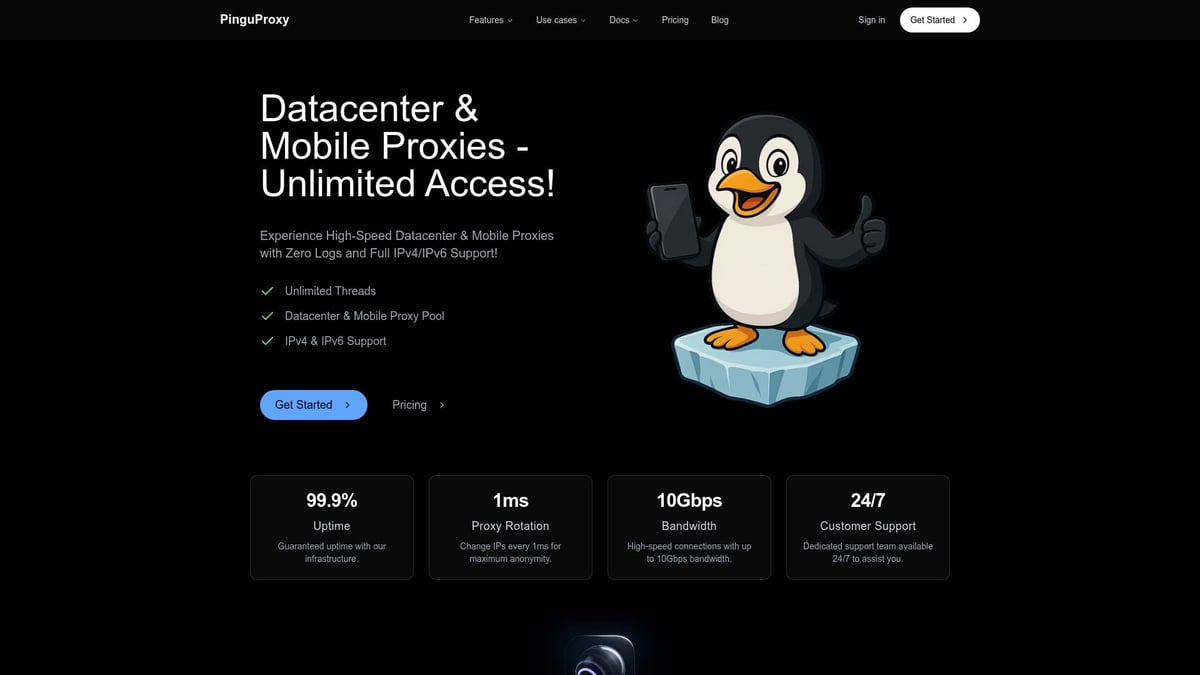
Key benefits include a strict zero-log privacy policy, 10Gbps bandwidth, and ultra-fast 1ms proxy rotation. Their platform is user-friendly, supporting both dashboard and API integration for seamless setup. You’ll also find flexible plans, from pay-as-you-go to enterprise subscriptions.
PinguProxy’s global coverage spans major regions, giving you access to reliable IPs wherever you need them. They even offer free TOR/mobile proxies with each plan, adding extra value. Around-the-clock support ensures help is always available, making PinguProxy a smart choice for anyone needing a robust 4g mobile proxy.
Comparing Leading Providers
When evaluating 4g mobile proxy providers, a side-by-side comparison can clarify your options. Here’s a quick look at how leading services stack up:
| Provider | Pool Size | Global Coverage | Speed/Bandwidth | Support | Unique Feature |
|---|---|---|---|---|---|
| PinguProxy | Large | 100+ countries | 10Gbps/Ultra | 24/7 | Free TOR/mobile proxies |
| Provider A | Medium | 50+ countries | High | Business hrs | Dedicated mobile IPs |
| Provider B | Large | 80+ countries | High | 24/7 | Custom rotation options |
For example, if you’re running social media automation, a 4g mobile proxy with robust rotation and global reach is essential. Compare providers not just on specs, but also on customer reviews and support responsiveness.
Remember: the right provider should match your geographic needs, offer reliable speeds, and provide excellent support. Always prioritize your core requirements when making the final choice.
Red Flags and Common Pitfalls
Not all 4g mobile proxy providers are created equal. Beware of services with vague or misleading policies, especially regarding logging and data handling. Cheap or free proxies may seem tempting but often come with hidden risks like malware, unstable connections, or data leaks.
Be cautious of providers with limited support or no clear uptime guarantees. Lack of transparency is a major warning sign. Always read customer reviews and check for ethical practices.
Responsible use is critical. For more details on best practices and legal considerations, see Ethical proxy usage best practices. By staying vigilant and informed, you’ll avoid the most common pitfalls and protect both your data and reputation when working with any 4g mobile proxy.
Step-by-Step Guide: Setting Up and Using 4G Mobile Proxies
Setting up a 4g mobile proxy doesn’t have to be complicated. By following a clear, step-by-step approach, you’ll unlock powerful privacy, automation, and access features for your business or personal projects. Let’s break down the process into actionable stages so you can get started with confidence.
Step 1: Assess Your Needs
Before you dive into the world of 4g mobile proxy solutions, it’s essential to outline your requirements. Are you looking to scale web scraping, manage multiple social media accounts, or bypass geo-restrictions? Pinpointing your use case ensures you select the right features.
Consider factors like:
- Geographic locations needed
- Desired IP rotation frequency
- Number of concurrent connections
If you’re new to this space, resources like the Comprehensive Guide to Mobile Proxies can help you understand the landscape. Defining these needs will save you time and money as you build your 4g mobile proxy workflow.
Step 2: Select a Trusted Provider
Choosing the right provider is critical for a seamless 4g mobile proxy experience. Look for vendors with large, diverse IP pools, strong uptime records, and positive customer reviews.
Evaluate providers based on:
- Proxy pool size and countries covered
- Speed and bandwidth guarantees
- Security policies, such as zero-log commitments
Don’t forget to check support options and pricing models. Some offer pay-as-you-go plans, while others have monthly subscriptions. A reputable provider will also offer transparent documentation and responsive customer service, making your 4g mobile proxy setup stress-free.
Step 3: Purchase and Configure Your Proxy
Once you’ve chosen your provider, it’s time to set up your 4g mobile proxy. Most platforms guide you through account creation and let you select proxies based on location or rotation preferences.
You’ll typically access your proxy details - IP, port, username, and password - via a user dashboard or API. Here’s a sample configuration for a common use case:
Proxy IP: 192.0.2.1
Port: 8080
Username: youruser
Password: yourpass
Enter these credentials into your tools or browsers. The right setup ensures your 4g mobile proxy is ready for any task.
Step 4: Integrate with Your Tools
A 4g mobile proxy is only as powerful as the software it supports. Integration is straightforward with most scraping bots, automation platforms, and browsers.
Typical integration steps:
- Enter proxy credentials into your application’s proxy settings
- Select the protocol (usually HTTP or SOCKS)
- Test the connection to ensure it’s working
Popular tools like Scrapy, Selenium, or browser extensions make it easy to leverage your 4g mobile proxy for various workflows. This flexibility is key for scaling operations efficiently.
Step 5: Optimize Performance and Monitor Usage
To get the best results from your 4g mobile proxy, keep an eye on speed, reliability, and proxy health. Providers often offer dashboards to monitor usage statistics and connection quality.
Optimization tips:
- Rotate IPs regularly to avoid bans
- Monitor data limits and uptime
- Adjust concurrency based on performance feedback
Staying proactive about proxy health helps you maintain smooth operations and reduces the risk of disruptions when using a 4g mobile proxy.
Step 6: Maintain Privacy and Security
Finally, protecting your privacy and ensuring compliance is vital with any 4g mobile proxy. Always use secure passwords and enable IP rotation to avoid fingerprinting.
Best practices include:
- Avoid sharing credentials
- Regularly update your software
- Stay informed about platform terms and laws
By following these guidelines, you’ll maximize the security and effectiveness of your 4g mobile proxy setup while minimizing risks.
Future Trends: The Evolution of Mobile Proxies in 2025 and Beyond
The world of 4g mobile proxy technology is evolving rapidly, opening new possibilities for privacy, automation, and global access. As 2025 unfolds, several major trends are shaping the future of mobile proxies, making them more powerful and versatile than ever before.
Rise of 5G and eSIM Proxies
The shift from 4g mobile proxy solutions to 5G proxies is revolutionizing the industry. With 5G, users experience higher speeds, ultra-low latency, and the ability to handle more simultaneous connections. This unlocks new use cases for real-time data collection, gaming, and streaming.
eSIM technology is also gaining traction, enabling instant switching between carriers and locations without physical SIM swaps. This flexibility allows users to quickly adapt their proxy footprint for better coverage and efficiency. For a deeper dive into how 5G is improving proxy performance, check out 5G Integration and Performance Improvements.
Increased Anti-Bot Measures and Proxy Detection
As 4g mobile proxy adoption grows, websites and platforms are stepping up their anti-bot defenses. Advanced detection technologies now analyze user behavior, device fingerprints, and network patterns to identify proxy traffic.
To stay ahead, proxy providers are integrating AI-driven stealth techniques and more sophisticated user simulation. These innovations make it harder for websites to detect and block automated tasks, ensuring the continued effectiveness of 4g mobile proxy setups. AI and decentralized networks are also emerging as critical trends, as discussed in Future Trends in Mobile Proxies.
Expanding Global Coverage and Accessibility
The global footprint of 4g mobile proxy networks is expanding. New proxy locations are emerging in previously underserved regions, supported by a wider range of carriers and improved infrastructure.
This growth is enabling businesses to access localized data, test geo-specific services, and tap into emerging markets. Industries such as IoT and mobile gaming are also leveraging these proxies for secure, high-performance connections.
Regulatory and Ethical Considerations
With the rise of 4g mobile proxy use, regulations around privacy, data protection, and ethical operation are under scrutiny. Laws are evolving to address fair use, transparency, and compliance with local regulations.
Users and providers must prioritize responsible proxy usage, understanding both the benefits and the legal boundaries. Staying informed about compliance requirements is essential for building a sustainable, ethical proxy strategy.Now that you’ve got a clear picture of what 4G mobile proxies can do - whether you’re looking to level up your web scraping, boost your privacy, or bypass those annoying geo-restrictions - it’s a great time to put your knowledge into action. With PinguProxy, you get fast, reliable, and secure proxies that are built for everything from automation to gaming, all with all-in-one features and round-the-clock support. If you’re ready to take the next step and see how easy it is to get started, just Get Started Now.