
4G Proxy Guide: Everything You Need to Know in 2026
In 2026, the digital world is more connected and complex than ever, making online privacy and unrestricted access a real challenge. With stricter restrictions and smarter detection systems, the 4g proxy has become a crucial tool for anyone seeking privacy, security, and efficiency online.
This guide brings you the latest insights into what 4g proxy is, how it works, and why it matters. Whether you want to protect your identity, bypass blocks, or automate tasks, discover how 4g proxy offers unique solutions.
Ready to unlock the potential of mobile proxies? Dive in and make informed decisions for your digital future.
What Are 4G Proxies?
Understanding the 4g proxy landscape is crucial for anyone seeking privacy, security, or efficiency in 2026’s digital world. Let’s break down what makes these proxies unique, how they function, and why they are in high demand.
Definition and Core Concepts
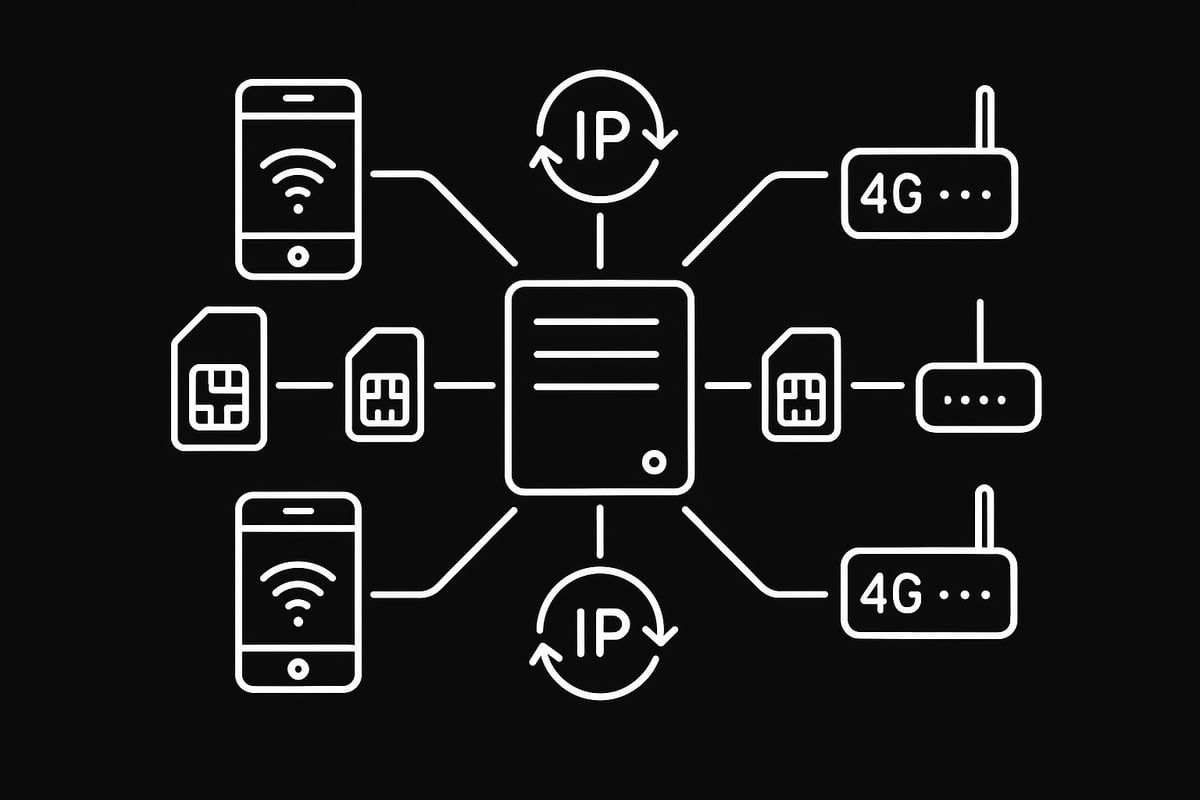
A 4g proxy is an intermediary server that uses real mobile IP addresses assigned by 4G cellular networks. Unlike datacenter proxies, which use static, easily detectable IPs, or residential proxies that rely on home internet connections, 4g proxies employ SIM cards and mobile modems to mimic genuine mobile user activity.
The core principle is simple: when you connect through a 4g proxy, your traffic appears to originate from an actual mobile device on a carrier network. This makes your requests blend in with regular mobile users, reducing the chances of being flagged or blocked.
There are two main types: dedicated 4g proxies, which provide exclusive access to a single user, and rotating 4g proxies that cycle IPs among users at set intervals. Curious for more technical details? See this 4G Mobile Proxy Explained guide.
How 4G Proxies Work
The journey of a connection through a 4g proxy involves several key steps:
Device → Connects to 4g proxy server
Proxy server → Routes request via mobile modem/SIM
Mobile network → Assigns real 4G IP address
Proxy server → Forwards traffic using that mobile IP
Destination → Sees request as coming from a real mobile user
IP assignment is dynamic. Typically, the 4g proxy rotates its IP every few minutes or on demand, masking your location and identity. This approach allows users to appear as if they are accessing the internet from different regions, which is especially useful for bypassing geo-restrictions.
For example, a marketer in Europe can use a US-based 4g proxy to test mobile ads in American cities, appearing as a local user without physically being there.
Key Technical Features
Top-tier 4g proxy services deliver features designed for reliability and flexibility:
- Unlimited bandwidth and support for many concurrent connections
- Consistent uptime rates, often 99.9% or higher
- Compatibility with HTTP, HTTPS, and SOCKS5 protocols
- Customizable IP rotation intervals (e.g., every 1 to 10 minutes, or instantly)
These technical advantages ensure that a 4g proxy can handle demanding applications, from high-volume web scraping to multi-account social media management.
Differences Between 4G and 5G Proxies
While 4g proxy solutions are known for stability and widespread network compatibility, the rise of 5G proxies brings higher speeds and lower latency. However, 4g proxies remain preferable in scenarios where network consistency and broader coverage matter more than raw speed.
Here’s a quick comparison:
| Feature | 4G Proxy | 5G Proxy |
|---|---|---|
| Speed | Fast | Ultra-fast |
| Reliability | High | Variable (newer) |
| Coverage | Global | Limited (growing) |
| Use Case | Stable, trusted | Advanced, niche |
4g proxy services are often chosen for tasks where compatibility with existing platforms and anti-detection systems is critical.
Relevant Statistics
The global reach of 4g proxy networks is impressive. Leading providers now offer access to over 30 million mobile IPs across 170+ countries and more than 50 US locations.
This massive IP pool gives users the flexibility to target precise regions and carriers. For example, ProxyEmpire alone covers a vast array of mobile endpoints, empowering users with unparalleled geolocation options.
Examples
4g proxy technology powers a range of modern applications:
- Social media automation tools use 4g proxies to prevent bans and manage multiple accounts.
- Web scraping projects rely on mobile IPs to collect data without triggering detection systems.
- Ad verification agencies simulate real-user visits from various regions, ensuring ad compliance and detecting fraud.
In short, the versatility of a 4g proxy makes it a cornerstone for privacy, efficiency, and access in the modern internet landscape.
Main Benefits and Use Cases of 4G Proxies
The digital world in 2026 is more connected than ever, but also more complex. A 4g proxy is now essential for individuals and businesses aiming to stay private, secure, and efficient online. Let’s break down the main benefits and real-world use cases that make 4g proxy solutions so powerful and versatile.

Privacy, Anonymity, and Security
A 4g proxy offers unmatched privacy by assigning real mobile IPs from genuine SIM cards. This makes online activity appear like that of a typical user, minimizing the risk of detection or bans. Unlike datacenter proxies, 4g proxy solutions leverage the trustworthiness of mobile networks.
Top providers offer zero-log policies and exclusive device access, ensuring your browsing history and identity remain confidential. For example, bypassing anti-bot systems on e-commerce platforms or social media becomes simple when using a 4g proxy. Enhanced privacy is a core reason why more users are turning to these solutions in 2026.
Web Scraping and Data Collection
With a 4g proxy, large-scale data extraction becomes seamless and reliable. Mobile IPs are less likely to be blacklisted, allowing for efficient web scraping on price monitoring sites, travel aggregators, or stock market platforms.
Rotating IPs help avoid rate limits and CAPTCHAs, which is crucial for uninterrupted data collection. Some providers report 99.95% uptime and sub-second response times, making the 4g proxy an ideal tool for market intelligence. For a deeper dive into how organizations leverage these proxies for big data, check out Using Big Data for Competitive Advantage with 4G/5G Mobile Proxies.
Social Media Management and Automation
Managing multiple social media accounts can be risky without the right tools. A 4g proxy allows marketers and agencies to create, verify, and maintain accounts on platforms like Instagram, Facebook, and TikTok without triggering security alerts.
These proxies enable influencer marketing campaigns to run smoothly, as each account appears to originate from a unique mobile device. Automation tools benefit greatly from the reliable, rotating IPs offered by a 4g proxy.
Ad Verification and Brand Protection
For brands, verifying ads and monitoring their placement is vital. A 4g proxy enables real-user emulation, so you can check geo-targeted ads across different locations.
This helps detect ad fraud and ensures compliance with local regulations. Global agencies rely on 4g proxy solutions to maintain their brand’s reputation and protect their advertising investments in various markets.
Bypassing Geo-Restrictions and Censorship
Accessing region-locked content is another major benefit of a 4g proxy. Whether you want to stream US-only shows, play games, or read news unavailable in your area, these proxies make it possible.
They also help users circumvent government or ISP-imposed restrictions, supporting an open and uncensored internet experience worldwide. With a 4g proxy, you can access the information and services you need, wherever you are.
E-commerce and Sneaker Purchasing
In the world of e-commerce, especially during high-demand product launches, a 4g proxy is a must. Sneaker bots and automated checkout tools use these proxies to avoid bans and increase success rates.
By rotating mobile IPs, users can monitor products and complete purchases faster than competitors. This gives resellers and shoppers a significant edge during limited-edition drops and flash sales.
App Testing and Development
Developers and QA teams use a 4g proxy to test mobile apps under real-world network conditions. Simulating user activity from multiple regions and carriers is crucial for robust app development.
A 4g proxy allows teams to replicate customer environments, ensuring apps perform well across different networks. This real-world testing leads to better products and improved user satisfaction.
Choosing the Right 4G Proxy Provider in 2026
Selecting the right 4g proxy provider in 2026 is essential for privacy, performance, and scalability. With so many options, knowing what to look for can save you time, money, and frustration. Let’s break down the most important factors to consider so you can make a confident decision.
Key Criteria for Evaluation
When comparing 4g proxy providers, focus on these essential criteria:
- Location Coverage: Check the number of countries, cities, and mobile carriers available.
- Bandwidth and Speed: Look for speeds up to 10Gbps and unlimited bandwidth for seamless data flow.
- Uptime Guarantees: Leading providers offer 99.9% or higher uptime for reliability.
- IP Rotation and Session Control: Flexible IP rotation (every 1-10 minutes or on demand) keeps your connections fresh and undetected.
- Protocol Support: Ensure support for HTTP, HTTPS, and SOCKS5.
- Concurrent Connections: Unlimited threads and connections are vital for automation or scaling.
For a step-by-step breakdown on how to evaluate and purchase your ideal 4g proxy, check out this Buy Mobile Proxy Guide.
| Feature | Why It Matters | What to Look For |
|---|---|---|
| Location Coverage | Targeting specific regions | 170+ countries, multiple ISPs |
| Bandwidth/Speed | Fast, uninterrupted access | Up to 10Gbps, no caps |
| Uptime | Reliable online presence | 99.9%+ uptime |
| Rotation/Session | Avoiding detection | Customizable, on-demand options |
| Protocol Support | Tool compatibility | HTTP, HTTPS, SOCKS5 |
Security and Privacy Considerations
A trustworthy 4g proxy provider must prioritize privacy and ethical practices. Look for:
- Zero-Log Policies: No logs mean your activity stays private.
- Ethical IP Sourcing: Providers should obtain IPs legally and transparently.
- Dedicated vs. Shared Proxies: Dedicated proxies offer exclusive access, improving both privacy and reliability.
For instance, some providers offer exclusive mobile proxies with no bandwidth limits, ensuring your 4g proxy usage is both secure and efficient.
Customer Support and Usability
Responsive support and an intuitive dashboard can make or break your 4g proxy experience.
- 24/7 Support: Fast help is crucial, especially for mission-critical tasks.
- User-Friendly Dashboards: A simple interface allows you to manage proxies, monitor bandwidth, and rotate IPs with ease.
- Live Chat: Immediate solutions reduce downtime.
Providers with real-time dashboards and live support help you get the most out of your 4g proxy investment.
Pricing Models and Value
Pricing varies widely between 4g proxy providers, so compare carefully:
- Subscription Options: Monthly, yearly, or pay-as-you-go plans.
- Free Trials and Refunds: Test before committing and know your rights.
- Transparent Fees: No hidden costs or surprises.
For example, some providers offer low-cost trials and clear pricing, letting you try their 4g proxy service risk-free.
Integration and Compatibility
Your 4g proxy should work seamlessly with your favorite tools and applications.
- Automation Tools: Ensure compatibility with Multilogin, GoLogin, Octobrowser, and similar platforms.
- API Access: Developers and enterprises need robust, well-documented APIs.
- One-Click Integration: Simplifies setup for social media, scraping, and testing tools.
Seamless integration lets you unlock the full power of your 4g proxy across workflows.
Reputation and Reviews
Always research what other users say about a 4g proxy provider.
- Review Scores: Trustpilot ratings (4.8/5 or higher) and SourceForge feedback are strong indicators.
- Certifications: Look for third-party trust seals like EWDCI.
- Transparency: Providers that clearly display their credentials and customer ratings are more likely to deliver on their promises.
A provider with high ratings and ethical certifications is more likely to offer a reliable 4g proxy solution for your needs.
How to Set Up and Use a 4G Proxy: Step-by-Step Guide
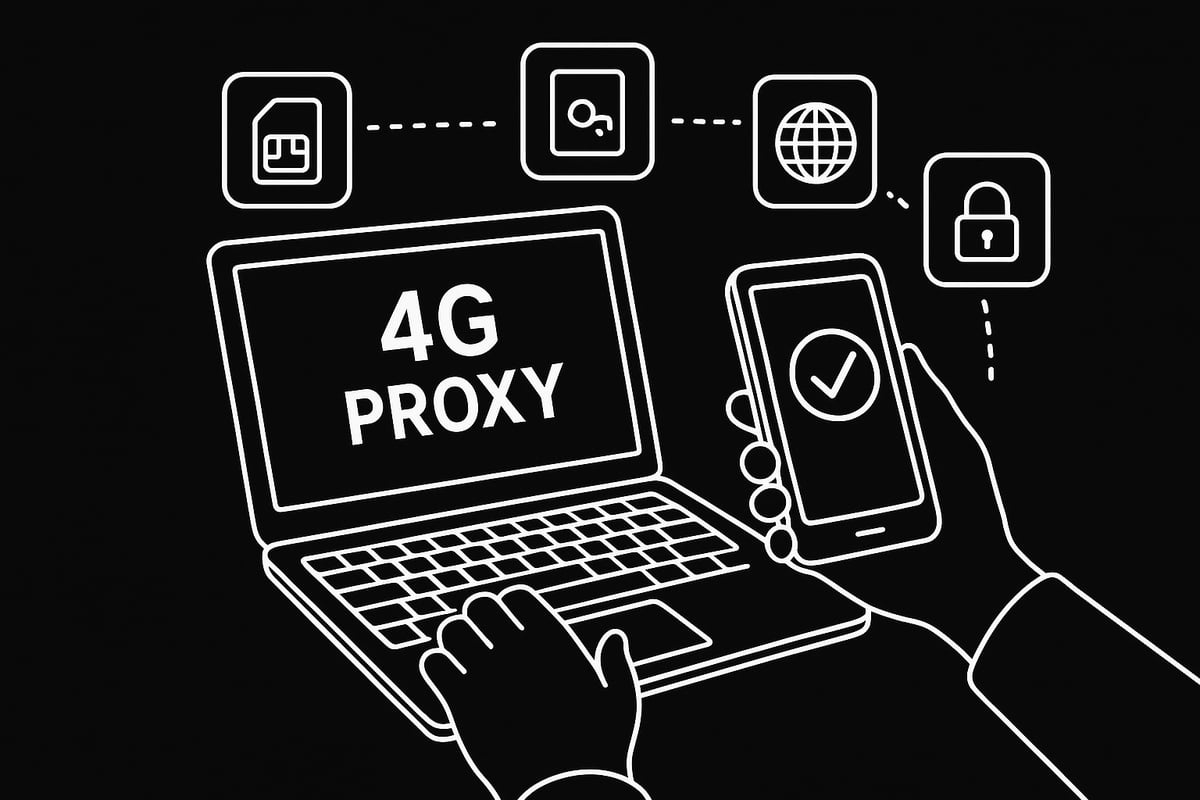
Setting up a 4g proxy might seem complex, but with the right approach, anyone can do it. Whether you’re new to proxies or looking to optimize your workflow, this guide will walk you through each step, making the process smooth and secure.
Step 1: Select a Reputable Provider
Begin by researching 4g proxy providers. Look for those with strong reputations, wide location coverage, and transparent policies. Review their features, subscription options, and customer feedback. Once you find a provider that fits your needs, sign up and choose the right plan, such as dedicated or rotating proxies and preferred regions.
Step 2: Obtain Proxy Credentials
After signing up, your provider will send you the necessary credentials. This typically includes the IP address, port, username, and password for your 4g proxy. Some providers email these details, while others offer a dashboard for secure download. Keep this information safe, as you’ll need it for setup.
| Credential | Example Value |
|---|---|
| IP Address | 192.0.2.10 |
| Port | 8080 |
| Username | user123 |
| Password | pass456 |
Step 3: Configure Your Device or Application
Input your 4g proxy details into your browser, automation software, or scraping tool. Choose the required protocol, such as HTTP or SOCKS5. Here’s a basic example for browser settings:
Proxy Type: HTTP
Proxy IP: 192.0.2.10
Port: 8080
Username: user123
Password: pass456
For specialized tools like Multilogin or GoLogin, follow their proxy configuration guides to ensure seamless integration.
Step 4: Test the Proxy Connection
Once configured, verify your 4g proxy is active. Use online tools like WhatIsMyIP to check your new IP address and location. Confirm that your connection is stable and your real identity is masked. If issues arise, double-check your credentials and settings.
Step 5: Optimize Settings for Your Use Case
Adjust your 4g proxy settings to match your specific needs. Set IP rotation intervals, such as every five minutes or on demand, for tasks like web scraping or account management. If your provider allows, select geo-location or carrier options to simulate different user environments.
Step 6: Monitor Performance and Usage
Use your provider’s dashboard to track bandwidth, concurrent connections, and uptime. Monitor your 4g proxy performance to spot potential issues early. If you experience slow speeds or connection drops, reach out to customer support for quick resolution.
Step 7: Maintain Security and Compliance
To keep your 4g proxy secure, rotate your credentials regularly and never share access with unauthorized users. Always follow your provider’s terms and respect legal requirements. This ensures your proxy activities stay ethical and risk-free.
By following these steps, you can confidently set up and utilize a 4g proxy for privacy, automation, and online efficiency.
[PinguProxy: High-Speed 4G Proxy Solutions for 2026] (https://pinguproxy.com)
As the demand for high-performance 4g proxy solutions grows in 2026, PinguProxy stands out as a leader in the industry. Whether you need seamless privacy, robust security, or rapid access to online resources, PinguProxy’s innovative infrastructure delivers reliable results for both individuals and enterprises.
PinguProxy’s 4g proxy network is built on real mobile IPs sourced directly from mobile carriers, ensuring authentic device fingerprints and unmatched trust scores. Users benefit from unlimited bandwidth and industry-leading speeds up to 10Gbps, making it ideal for mission-critical applications. With advanced privacy tools, zero-log policies, and both IPv4 and IPv6 support, your browsing and automation activities remain anonymous and secure at all times.
A key advantage of choosing PinguProxy is the flexibility to rotate proxies as quickly as every millisecond. This rapid rotation, combined with a pool of fresh mobile IPs, enables you to bypass even the toughest anti-bot systems and geo-restrictions. Supported use cases include:
- Web scraping and large-scale data collection
- Social media automation and account management
- Bypassing geo-blocks for streaming, gaming, and news
- Ad verification and brand protection
Managing your 4g proxy setup is straightforward with PinguProxy’s intuitive dashboard. You can monitor real-time usage, control IP rotation, and access 24/7 expert support whenever you need help. Flexible pricing plans are available for both individuals and businesses, and every plan comes with a free mobile proxy to help you get started quickly.
PinguProxy’s dedication to privacy and ethical standards is evident in its zero-log approach and responsible sourcing of mobile IPs. To better understand how 4g proxy technology compares to other options, check out their detailed guide on Mobile Proxies vs Residential Proxies. With a 99.9%+ uptime guarantee and a global network spanning major regions, PinguProxy empowers users to unlock secure, unrestricted online access in 2026.
The Future of 4G Proxies: Trends and Predictions for 2026
As we look ahead, the 4g proxy landscape is set for exciting changes. From the rise of 5G to smarter automation and ever-tighter privacy rules, the future is all about adaptability and innovation. Let’s explore the trends shaping 4g proxy usage in 2026 and beyond.
Rise of 5G and Beyond
The introduction of 5G technology is transforming how proxies operate. While 5G proxies promise ultra-fast speeds and lower latency, the 4g proxy remains a preferred choice for many businesses due to its broader compatibility and stability. Hybrid strategies are emerging, where companies combine both 4g proxy and 5G proxies for optimal results.
Here’s a quick comparison:
| Feature | 4G Proxy | 5G Proxy |
|---|---|---|
| Speed | High | Ultra-high |
| Coverage | Extensive | Growing |
| Cost | Moderate | Higher |
| Compatibility | Universal | Selective |
For a deeper dive into the technical differences and real-world applications, see this 4G vs 5G Mobile Proxies: Speed, Stability, Coverage, and Costs guide. The future will not be about replacing the 4g proxy, but rather leveraging both technologies for specialized use cases.
Evolving Anti-Detection Technologies
Detection systems are getting smarter in 2026. Platforms now deploy advanced machine learning to spot suspicious activity. However, a 4g proxy can still outsmart many of these systems by mimicking real user behavior. This is due to the use of genuine mobile IPs and dynamic IP rotation.
Providers now boast 99.95% uptime and lightning-fast response times. These technical advantages help users avoid blocks, bans, and CAPTCHAs. As anti-bot technology evolves, so too does the sophistication of 4g proxy solutions, keeping users one step ahead in the ongoing privacy battle.
Expansion of Use Cases
The demand for 4g proxy services is exploding across industries. E-commerce, fintech, and cybersecurity are just a few sectors experiencing rapid growth. Companies use 4g proxy setups for real-time price monitoring, fraud prevention, and large-scale data collection.
According to Mobile Proxy Server Market Size and Share, the market for mobile proxies is projected to expand significantly in the coming years. This growth is fueled by new use cases in IoT, app testing, and global ad verification. The versatility of 4g proxy technology ensures it will remain central to digital operations.
Regulatory and Ethical Considerations
Global regulations on privacy and data use are tightening. In 2026, using a 4g proxy means paying close attention to compliance and ethical sourcing. Providers now highlight zero-log policies and third-party certifications to build trust with users.
Ethical standards, such as EWDCI certification, are becoming expected. Users and businesses alike are seeking assurance that their 4g proxy provider operates transparently and within legal frameworks. This shift encourages responsible proxy use and helps protect user rights worldwide.
Integration with AI and Automation
Artificial intelligence is revolutionizing proxy management. Modern 4g proxy solutions integrate AI for smarter IP rotation, session control, and adaptive anti-ban tactics. Automation tools now use 4g proxy IPs at scale, powering everything from web scraping to social media management.
Example of AI-driven IP rotation logic:
if failed_request_count > 3:
    rotate_4g_proxy_ip()
This level of automation maximizes efficiency and keeps users agile in a competitive online environment. The synergy between AI and 4g proxy technology is unlocking new levels of productivity.
Geographic Expansion and Carrier Diversity
Coverage is a major focus moving forward. 4g proxy providers are rapidly adding more countries, cities, and carriers to their networks. This enables users to target specific regions or even individual ISPs for granular testing or localized content access.
With over 170 countries now supported by leading providers, the reach of the 4g proxy continues to expand. Carrier diversity ensures users can simulate real-world scenarios, making these proxies invaluable for global businesses and developers alike.
User Experience and Accessibility
User experience is at the forefront of 4g proxy innovation. Enhanced dashboards, real-time analytics, and API access are making proxy management simpler than ever. Even non-technical users can now set up and monitor their 4g proxy with ease.
One-click integrations with popular tools, intuitive interfaces, and live support are becoming standard. These improvements lower the barrier to entry and allow more people to harness the power of 4g proxy technology for their projects.
Key Takeaways for 2026
The 4g proxy remains an essential tool for privacy, data access, and automation. As technology advances, choosing a reputable, ethical provider is more important than ever. Staying informed about trends and best practices will help users maximize the value of their 4g proxy solutions and adapt to the evolving digital landscape.Now that you understand how 4G proxies can supercharge your privacy, unlock content, and power up your automation in 2026, why not take the next step? With PinguProxy, you get high-speed, reliable mobile proxies, a zero-log policy, and instant IP rotation - all backed by real experts, day or night. Whether you want to scale your web scraping, manage social accounts, or simply browse more securely, it’s easy to get started. If you’re ready to put these insights into action and see the benefits for yourself, Get Started Now.