Online privacy remains a pressing concern in 2026, with threats to personal data and digital freedom still on the rise. A free http proxy can help you bypass restrictions and mask your IP address, but it does not make browsing secure on its own. This article reviews seven free HTTP proxy sources, including where to find a free https proxy server list that is regularly refreshed. You'll learn what HTTP proxies are, how they work, which security limits apply, how to test a proxy before use, and how free options compare with paid ones. Use the comparison below to choose a source that fits your workload.
What is an HTTP Proxy and How Does It Work?
Understanding how a free http proxy works is essential for anyone who collects web data or wants more control over their traffic in 2026. An HTTP proxy acts as an intermediary between your device and the websites you access. When you use a free http proxy, your internet requests go to the proxy server first, which then forwards them to the destination site. This process hides your real IP address, making it harder for websites or trackers to identify your location or device.
Definition and Core Functionality
An HTTP proxy is a gateway that handles your web traffic. It intercepts your connection requests, processes them, and communicates with the target website on your behalf. This setup means you never connect directly to the site, but instead through the proxy. There are multiple proxy protocols to consider: HTTP proxies are designed for web traffic, HTTPS proxies add encryption for security, while SOCKS4 and SOCKS5 proxies handle broader types of traffic and support more applications. If you want a deeper dive into these differences, check out this types of proxy servers explained article.
A free http proxy is commonly used for:
- Hiding your IP address for anonymous browsing
- Accessing geo-blocked websites and content
- Web scraping for data collection
- Testing how a site responds to requests from different locations
Types of HTTP Proxies
Not all proxies offer the same level of anonymity. The three main types are:
- Transparent proxies: These reveal your real IP address to the website, providing minimal privacy.
- Anonymous proxies: These hide your IP but identify themselves as proxies.
- Elite (high anonymity) proxies: These hide your IP and do not announce that a proxy is in use. This describes header behavior only; it says nothing about whether your traffic is encrypted.
For anonymity-focused users, an elite free http proxy is the ideal choice. Services like Geonode and Proxifly let you filter proxy lists by anonymity level, making it easier to match your needs with the right type of proxy.
| Proxy Type | Hides IP | Reveals Proxy Use | Best Use Case |
|---|---|---|---|
| Transparent | No | Yes | Filtering, caching |
| Anonymous | Yes | Yes | Bypassing blocks, basic anonymity |
| Elite | Yes | No | Lower detection risk, web scraping |
How HTTP Proxies Affect Security
A free http proxy changes what a website sees, but it does not by itself protect your data. If you choose an HTTPS proxy and visit HTTPS sites, your data is encrypted in transit, shielding it from observers on the local network. Proxies can also reduce simple IP-based tracking and help distribute requests across several addresses.
For example, a web scraper using a free http proxy can reduce the chance of IP bans or throttling because requests appear to come from multiple sources. This technique is valuable for researchers, data engineers, and anyone who needs to spread requests across addresses. Anonymity of this kind is not the same as confidentiality, which the next sections cover.
Limitations and Risks
While a free http proxy offers benefits, it comes with risks. Some proxies are run by malicious actors who may intercept your data or inject ads. Plain HTTP proxies do not encrypt your traffic, making sensitive information vulnerable to interception. It's crucial to use reputable and frequently updated proxy lists to reduce exposure to threats.
Not every free http proxy is trustworthy. Stick with reliable sources and avoid entering personal data or login credentials when using unsecured proxies.
Free HTTP vs. HTTPS Proxy Security Risks
A plain HTTP proxy forwards your requests without encrypting them. Anyone who operates the proxy, or who can observe traffic between you and the proxy, can read URLs, headers, cookies and form data sent over unencrypted connections. This is the central risk of any free http proxy.
HTTPS and TLS address that risk. According to the OWASP Transport Layer Security Cheat Sheet, correctly implemented TLS provides confidentiality, integrity and server authentication. OWASP also notes that TLS does not verify the client's identity unless client certificates are used, so a proxy connection over TLS does not prove who you are to the destination. The same guidance recommends defaulting to TLS 1.3, permitting TLS 1.2 for compatibility, and disabling TLS 1.0 and 1.1.
Public networks add further exposure. CISA's August 28, 2025 Wi-Fi guidance states that public hotspots may be insecure, advises sending personal information only through encrypted websites or secure Wi-Fi, and recommends checking for HTTPS on every page.
| Factor | Plain HTTP proxy | HTTPS-capable proxy with HTTPS sites |
|---|---|---|
| Traffic encrypted in transit | No | Yes, between client and destination |
| Operator can read page content | Yes | Not for end-to-end HTTPS sites |
| Hides your IP from the site | Yes | Yes |
| Verifies the destination server | No | Yes, via certificates |
| Verifies your identity | No | No, unless client certificates are used |
Practical rules for any free proxy:
- Confirm HTTPS on every page before entering anything sensitive.
- Never send credentials, payment details or personal data through an untrusted proxy.
- Treat a proxy that presents certificate warnings as compromised and stop using it.
Key Criteria for Choosing a Free HTTP Proxy in 2026
Choosing the right free http proxy in 2026 depends on more than availability. Not all proxies are created equal, and these are the essential factors to consider before you trust your traffic to any service.
Security and Privacy Considerations
Security should always be at the top of your checklist when evaluating a free http proxy. Look for providers that clearly state they do not log your data, and that offer transparency about their server sources. Be cautious with proxies that lack a privacy policy or have vague terms, as these could expose you to tracking or malware.
Some free http proxy servers may intercept or log your traffic. Sticking with well-reviewed, regularly updated proxy lists reduces that risk, and verifying each proxy before use is the safer habit.
Speed, Uptime, and Reliability
A sluggish or unreliable free http proxy can stall a scraping job or a browsing session. Check each source's update frequency and any uptime statistics it publishes. Public proxies remain short-lived in the current landscape, so a fresh list is only a starting point and every entry should be tested.
Here's a quick comparison of what to look for:
| Feature | Why It Matters |
|---|---|
| Update Frequency | Ensures fresh, working proxies |
| Uptime Percentage | Predicts connection stability |
| Speed Metrics | Impacts browsing quality |
Prioritize proxies that demonstrate quick response times, especially for demanding tasks like scraping or video streaming.
Anonymity Levels and Geographic Diversity
Not all free http proxy services offer the same level of anonymity. Elite or high-anonymity proxies resist detection best, while transparent proxies may reveal your information. Choose based on your needs.
Geographic diversity is also important. The more countries a proxy list covers, the easier it is to test geo-restrictions. If you need region-specific results, look for lists with a broad global footprint.
Supported Protocols and Compatibility
Before selecting a free http proxy, confirm it supports both HTTP and HTTPS protocols. This ensures you can reach sites that require encryption.
Compatibility matters too. Check that the proxy list format matches your preferred browser, application, or automation tool. Many services offer proxies in .txt, .csv, or .json formats for flexibility.
Accessibility and Ease of Use
A quality free http proxy list should be easy to access and use. Look for features like:
- Direct download options
- Bulk export in multiple formats
- Clear instructions for setup
Some providers even offer browser extensions or simple configuration guides. These extras can save time, especially if you switch proxies often or use them for automation.
7 Best Free HTTP Proxy Options for Secure Browsing in 2026
Finding the right free http proxy starts with knowing which sources are maintained and which offer the filters you need. Whether you need to test geo-restrictions, mask your IP, or collect data, a free http proxy is a practical tool for both beginners and advanced users. "Secure" here depends on you using HTTPS sites end to end, as explained above.
Below are the free proxy platforms reviewed, with their strengths, user suitability, and limits. Figures such as proxy counts and refresh intervals change constantly, so check each site directly before relying on them.
Proxifly Free Proxy List
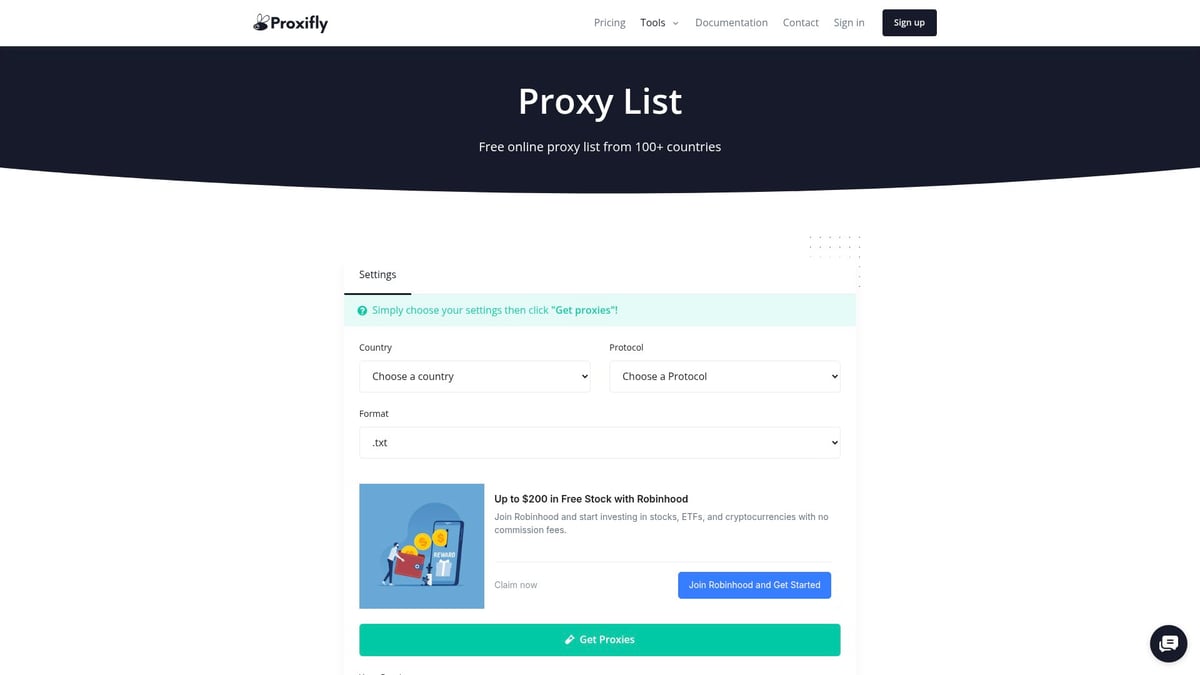
Proxifly is a leading choice for anyone searching for a free http proxy resource. The platform is free, requires no registration, and delivers a large pool of validated proxies.
Key Features:
- Frequent refreshes, with the list advertised as updated every few minutes.
- Supports HTTP, HTTPS, SOCKS4, and SOCKS5 protocols.
- Proxies from dozens of countries; the exact country count changes with each refresh, so check the live page.
- Download formats include .json, .txt, and .csv.
Benefits: You get direct access to thousands of proxies, with no registration. Proxifly is well suited to developers, web scrapers, and researchers who rely on bulk proxy integration. The multi-protocol support and easy download options make it a favorite for automation and browser use.
Pros:
- Fast updates and large proxy pool.
- Multi-protocol support for flexible use.
- Direct integration options for scripts and tools.
Cons:
- Public proxies can have inconsistent anonymity or uptime.
- No support if a proxy goes down.
Example:
The live page shows the current number of working proxies and how many use HTTP. These totals shift with every refresh, so record the date of any count you rely on.
Geonode Free Proxy List
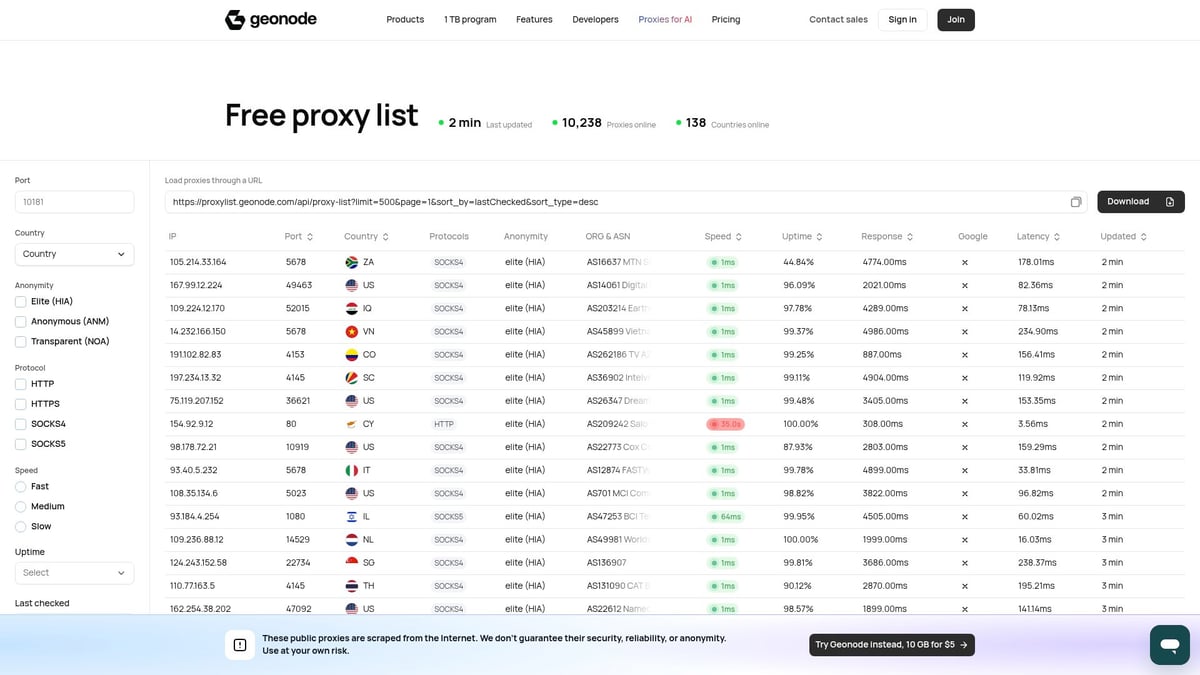
Geonode delivers a large free http proxy list with advanced filtering and performance metrics. While they offer premium services, their free tier is feature-rich and user-friendly.
Key Features:
- A large pool of proxies online at any given time, with broad country coverage that varies by day.
- Filters for elite, anonymous, and transparent proxies.
- Supports HTTP, HTTPS, SOCKS4, and SOCKS5.
- Stats such as uptime, response time, and speed.
Benefits: Geonode is designed for both technical and casual users. You can filter proxies by speed, protocol, and anonymity, or download in bulk for immediate use. The platform's detailed stats make it easier to shortlist proxies worth testing.
Pros:
- Large proxy pool and advanced filtering.
- Updated frequently.
- Bulk download and URL loading options.
Cons:
- No guarantees on the reliability of public proxies.
- Premium upsell may prompt users to consider paid plans.
Example:
You can filter for elite HTTP proxies with the highest reported uptime. Reported uptime describes past behavior only and is not a promise that a given proxy will stay online.
Free Proxy List by HideMy.name
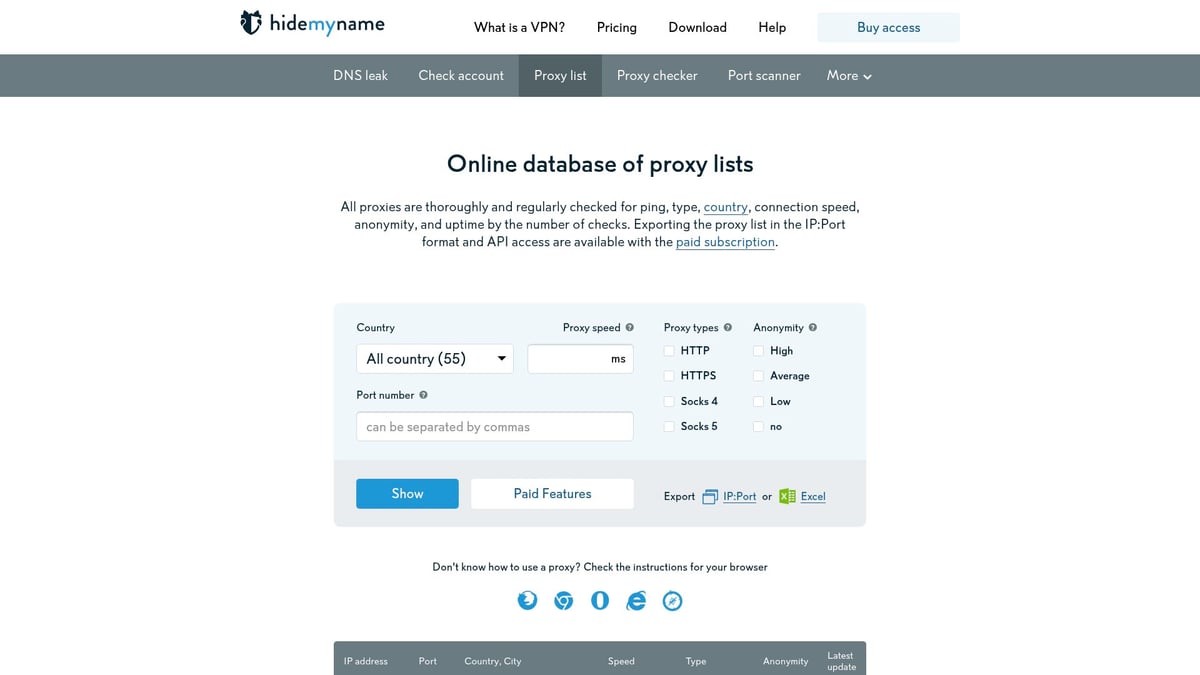
HideMy.name offers a clean, easy-to-use interface for discovering a free http proxy. Their database is regularly updated, and they also provide optional paid VPN services for users seeking more advanced privacy.
Key Features:
- Supports HTTP, HTTPS, and SOCKS proxies.
- Filters by country, protocol, anonymity, and speed.
- Download proxies in several formats.
- Detailed stats: uptime, speed, and location.
Benefits: This platform suits individuals who want to bypass content blocks or test regional access with minimal setup. The detailed proxy info and export options make it easy to integrate proxies into browsers or automation tools.
Pros:
- High transparency and clear proxy stats.
- Easy export options for quick setup.
- Intuitive user interface.
Cons:
- Some proxies may be slow or expire quickly.
- Proxy pool is smaller than some competitors.
Example:
Sort for the fastest HTTP proxies in your country and download them directly, then test each one before use.
SSLProxies.org
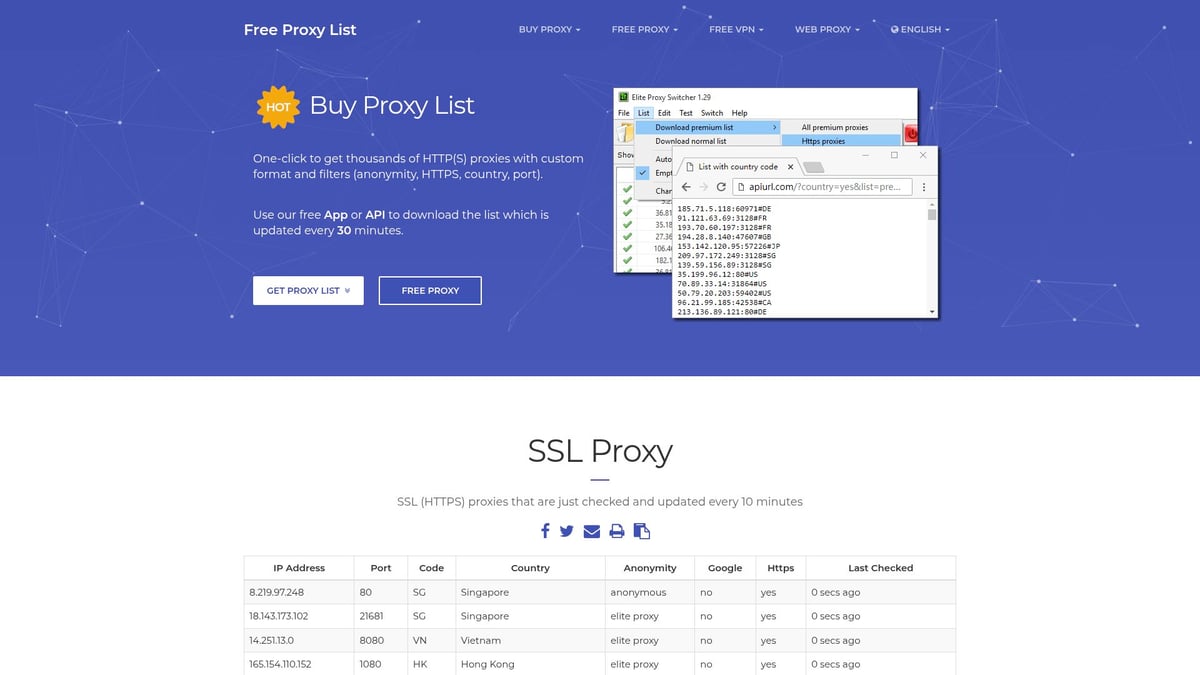
SSLProxies.org is built around simplicity. The platform provides a straightforward list of free http proxy servers with a focus on SSL (HTTPS) support.
Key Features:
- Free, with no sign-up required.
- HTTP and HTTPS proxies, refreshed on a short interval stated on the site (verify the current interval on the live page).
- Country filtering in a simple table format.
Benefits: SSLProxies.org is useful for quick proxy access, especially if you want to test HTTPS-capable proxies. The minimal design gets you a list fast, without distractions.
Pros:
- Frequent updates keep proxies fresh.
- Focus on HTTPS-capable proxies.
- Minimalistic, easy-to-navigate interface.
Cons:
- Smaller proxy pool compared to Geonode.
- Limited advanced filtering or stats.
Example:
Pull the current table of HTTP and HTTPS proxies for a quick test session, and verify each entry before using it.
Spys.one
Spys.one is a favorite among technical users who want granular control over their free http proxy choices. The platform has a large database and powerful filtering tools.
Key Features:
- Free list of HTTP and HTTPS proxies.
- Advanced filtering by port, country, anonymity, and more.
- Live proxy info and frequent updates.
Benefits: Spys.one suits automation specialists, researchers, and developers. The detailed information and unique filtering options help users pinpoint proxies that fit very specific needs.
Pros:
- Comprehensive data for each proxy.
- Frequent updates for reliability.
- Supports both HTTP and HTTPS.
Cons:
- Interface can be overwhelming for beginners.
- Ads may distract from the main content.
Example:
Select only high-anonymity HTTP proxies with low latency to build a short candidate list for testing.
FreeProxyList.net
FreeProxyList.net is a straightforward solution for anyone seeking a no-fuss free http proxy list. While the proxy pool is smaller, the platform makes up for it with ease of use and clear stats.
Key Features:
- HTTP and HTTPS proxies, refreshed regularly (check the live site for the current schedule).
- Filter by country and port.
- Export to .txt or .csv for easy use.
Benefits: FreeProxyList.net is useful for web testers and general users who want to quickly find and try proxies. The simple interface speeds up proxy selection and setup.
Pros:
- Easy export and straightforward navigation.
- Clear stats for uptime and speed.
- No account required.
Cons:
- Limited to HTTP/HTTPS, no SOCKS support.
- Smaller selection than other platforms.
Example:
Download a batch of HTTP proxies for your browser or script and run them through the checks described below.
Using a Free HTTPS Proxy Server List Safely
A free https proxy server list is a published set of proxy addresses and ports, usually with country, protocol, anonymity level and last-checked time. Sources such as SSLProxies.org, Geonode and Proxifly above all publish lists of this kind. The list itself only tells you where proxies are claimed to exist; it does not tell you who runs them or what they do with your traffic.
When working with any such list:
- Filter first. Select HTTPS-capable entries and the anonymity level you need, then discard anything with a stale "last checked" time.
- Prefer HTTPS destinations. Even through an HTTPS-capable proxy, only visit sites that load over HTTPS, and look for the HSTS header. OWASP's HTTP Security Response Headers Cheat Sheet gives a recommended example with a max-age of 63,072,000 seconds plus the includeSubDomains and preload directives.
- Validate in bulk. Run every address through the tests in the next section before it enters a scraping pool.
- Rotate and discard. Public entries die quickly, so build your tooling to expect failures and drop dead proxies automatically.
- Keep sensitive traffic off them. Logins and session cookies should never cross an untrusted proxy. OWASP's Session Management Cheat Sheet covers why session IDs need HTTPS throughout a session.
Data teams often store a validated shortlist in .txt or .json and refresh it on a schedule rather than trusting a raw download.
How to Test and Verify a Free Proxy
Verify each proxy before you use it, ideally with a script that checks the whole list. Cover these areas:
Anonymity and IP leaks
- Request an IP-echo or header-echo endpoint through the proxy and compare the returned IP with your real one.
- Inspect headers such as
Via,X-Forwarded-ForandForwarded. Their presence means a transparent or anonymous proxy, not an elite one. - For browser use, run a WebRTC and DNS leak check to confirm your real address is not exposed outside the proxy.
Speed and latency
- Time several requests to a stable target and record the median response time and failure rate.
- Discard proxies that exceed the timeout you set for your workload.
Uptime
- Retest at intervals over hours, not once. Public proxies often die within hours, so a single successful check proves little.
Traffic integrity
- Fetch a page you control through the proxy and compare the response body and headers with a direct request. Injected ads, scripts or altered content mean the proxy tampers with traffic.
- Request an HTTPS page and confirm the certificate chain is valid. A certificate error signals interception.
| Check | Method | Fail condition |
|---|---|---|
| IP leak | IP-echo endpoint | Real IP appears |
| Anonymity | Header echo | Proxy headers present when elite is claimed |
| Speed | Timed requests | Slow or timing out |
| Uptime | Repeated tests | Drops during the window |
| Integrity | Hash a page you control | Content differs |
Free Proxies vs. Free Plans and Paid Alternatives
Public free proxy lists, provider free plans or trials, and VPNs solve different problems.
| Option | Logging | Bandwidth | Support | Reliability |
|---|---|---|---|---|
| Public free proxy list | Unknown, operator unverified | Unmetered but throttled by load | None | Low, proxies expire quickly |
| Provider free plan or trial | Policy published, varies | Capped | Limited, often community | Moderate within limits |
| VPN | Policy varies by provider | Varies | Usually available | Higher, covers the whole device |
| Paid proxy service | Policy published | Plan-based | Included | High, with an uptime target |
A VPN encrypts traffic for the whole device, while a proxy typically handles only the application you configure. For data collection at scale, a VPN is usually the wrong tool because you need many distinct IPs, not one tunnel.
If free lists no longer meet your volume or reliability needs, paid networks are the next step. PinguProxy, for example, offers unlimited bandwidth on every plan, with datacenter, mobile, residential and TOR proxies on one account. Its residential targeting reaches 221 countries, and its network covers 190+ countries and regions with over 500 million IP addresses. It also states a zero-logs policy and a 99.9% uptime target monitored 24/7, with priority 24/7 support on its Enterprise plan.
Free Proxy Use Cases and Legal or Terms Considerations
Common legitimate uses for a free http proxy include:
- Testing how a website renders or responds from different locations
- QA and localization checks for geo-targeted content
- Academic and market research on publicly available pages
- Prototyping a scraping pipeline before moving to dedicated infrastructure
- Checking how your own site handles requests from varied IPs
Free proxies are poorly suited to anything involving accounts, payments or regulated data, because you cannot verify who operates them.
Before collecting data, review the following:
- Terms of service. Many sites prohibit automated access or circumventing access controls. A proxy does not change that obligation.
- robots.txt and rate limits. Respect crawl directives and throttle requests so you do not degrade the target service.
- Local law. Rules on computer access, copyright, database rights and personal data differ by jurisdiction. Personal data in a training corpus can trigger privacy obligations regardless of how it was collected.
- Bypassing restrictions. Using a proxy to evade geo-blocks or bans can breach a site's terms or local rules, so confirm that it is permitted for your purpose.
This section is general information, not legal advice. For production AI training data, consult counsel about your specific sources and jurisdictions.
Frequently asked questions
Is a free HTTPS proxy server list safe to use?
A list is only a set of addresses, and you cannot verify who operates each proxy. Treat every entry as untrusted, test it before use, and never send credentials or personal data through it. Visiting HTTPS sites and checking for HTTPS on every page, as CISA's Wi-Fi guidance advises, reduces but does not remove the risk.
What is the difference between an HTTP proxy and an HTTPS proxy?
An HTTP proxy forwards web requests without encrypting them, so the operator can read unencrypted traffic. An HTTPS-capable proxy supports encrypted connections, and with HTTPS sites TLS provides confidentiality, integrity and server authentication. TLS does not verify your identity unless client certificates are used, according to OWASP.
How do I check whether a free proxy is working and anonymous?
Send a request through the proxy to an IP-echo or header-echo endpoint and compare the result with your real IP. Look for Via or X-Forwarded-For headers, run a DNS or WebRTC leak test, and repeat the checks over time to measure uptime. Also compare a page you control against a direct request to detect altered content.
Are free proxy servers logging my browsing data?
You usually cannot confirm it, because public proxy operators rarely publish verifiable policies. Assume any free proxy may log or inspect unencrypted traffic, and avoid sending sensitive data through one. Providers that publish a zero-logs policy offer more accountability than anonymous list entries.
Can I use a free proxy list for web scraping legally?
The proxy is not the legal question; the target and your method are. Check each site's terms of service and robots.txt, respect rate limits, and consider privacy and copyright law in your jurisdiction, especially for AI training data. For anything beyond small tests, seek legal advice on your sources.
ProxyScrape Free Proxy List
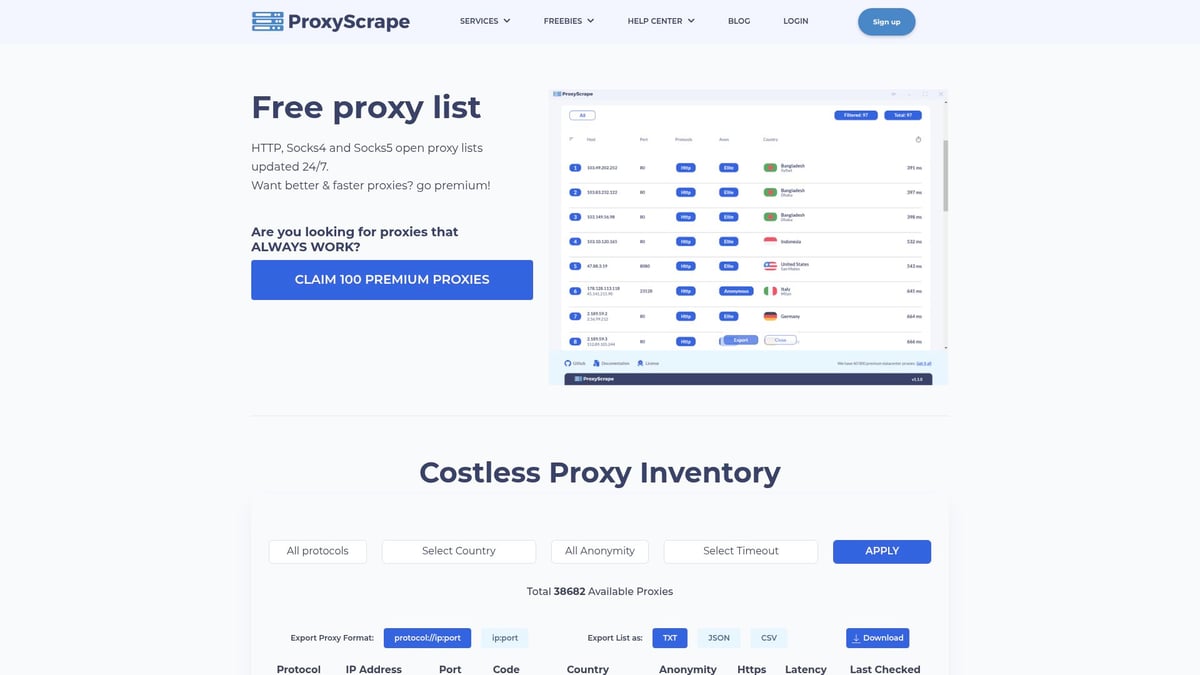
ProxyScrape is designed with developers and automation in mind, offering a dynamic free http proxy list with robust filtering and API access.
Key Features:
- HTTP, SOCKS4, and SOCKS5 proxies.
- Country, anonymity, and protocol filtering.
- API access for real-time proxy integration.
Benefits: ProxyScrape is ideal for building scripts, bots, or automation tools that require frequent proxy rotation. The regular updates and active community make it a reliable source for free http proxy solutions.
Pros:
- Developer-friendly features and API.
- Bulk download for large-scale projects.
- Active support and community.
Cons:
- Public proxies may be unstable or blocked by some sites.
- Occasional downtime for certain proxies.
Example:
Integrate HTTP proxies into your scripts using the real-time API, ensuring a resilient, always-on free http proxy setup.
How to Use Free HTTP Proxies Safely and Effectively
Navigating the world of free http proxy options can be empowering, but only if you use them wisely. Knowing how to set up, test, and maintain your proxies is essential for safety and performance. Let’s break down the steps for secure and effective usage.
Setting Up and Configuring Proxies
Getting started with a free http proxy is easier than you might think. Start by choosing a reputable proxy list provider and downloading your proxy addresses in your preferred format.
To configure a free http proxy in Chrome, go to Settings, search for “proxy,” and enter your server details. Firefox users can set a manual proxy in Network Settings. For automation tools or scripts, import your proxy list and set the proxy variable in your configuration file. If you’re unsure about proxy server addresses or how they work, check out this helpful guide on proxy server address basics.
- Download proxies in .txt, .csv, or .json formats
- Paste proxy details into your browser or tool
- Save changes and test your connection
Proper configuration ensures your free http proxy works smoothly across different platforms.
Best Practices for Security and Privacy
While free http proxy services provide quick access, they come with risks. Always avoid logging into sensitive accounts or handling private information over a free http proxy, especially if it lacks encryption. Prioritize HTTPS proxies when possible, as these encrypt your browsing session.
Rotate your proxies regularly to maintain anonymity and reduce the risk of bans. For a deeper look at technical vulnerabilities and tips for safe usage, see Proxy Security Risks: What to Know in 2024.
- Never enter passwords or payment details via untrusted proxies
- Use HTTPS for secure data transmission
- Switch proxies often to stay anonymous
Staying vigilant helps you get the most out of your free http proxy without sacrificing privacy.
Testing and Verifying Proxies
Not all free http proxy options are created equal. Test each proxy for speed, uptime, and anonymity before putting it to use. Online proxy checkers and browser extensions can instantly validate your proxy’s effectiveness.
- Check response time and uptime stats
- Verify anonymity level (transparent, anonymous, or elite)
- Use browser add-ons to test proxy performance
Regular testing ensures you’re getting reliable service from your free http proxy.
Legal and Ethical Considerations
Using a free http proxy comes with responsibilities. Always follow the terms of service for websites you visit and respect regional laws. Misusing proxies for illegal activities can result in bans or legal consequences.
- Avoid scraping sites that prohibit bots
- Respect content restrictions and copyright laws
- Understand the risks before accessing restricted material
Responsible use of your free http proxy protects both you and the proxy provider.
Troubleshooting Common Issues
Even the best free http proxy lists can have dead or slow proxies. If you experience connection drops or poor speeds, try another proxy from your list. Refresh your proxy sources often to find fresh, working options.
- Switch to a new proxy if one fails
- Update your proxy list regularly
- Test settings and clear browser cache if issues persist
With a little troubleshooting, you can keep your free http proxy setup running smoothly.
Alternatives to Free HTTP Proxies: When to Consider Paid Solutions
Online privacy continues to be a major concern, and while a free http proxy can offer basic anonymity, there are clear trade-offs to consider. According to recent Proxy Market Research 2025, the proxy landscape is evolving quickly, with growing demand for secure and reliable solutions. If you rely on a free http proxy for everyday browsing, it's important to understand its limitations and when to explore paid alternatives.
Limitations of Free Proxy Services
Free http proxy services can be unpredictable. They often have fluctuating speeds and uptime, which can disrupt streaming or automated tasks. Public proxies may log your activity or expose you to malware. Since these proxies are shared by many users, your connection can be unstable or even blocked by popular websites.
- Unreliable uptime and speed
- Potential privacy risks from logging or data leaks
- Limited customer support
Benefits of Paid Proxy Providers
Paid proxy services address many of these issues. With a paid provider, you can expect higher speeds, dedicated support, and far better reliability than with any free http proxy. Many paid proxies also offer zero-log policies, encrypted connections, and advanced features like rotating IP addresses for extra anonymity.
- Consistent performance
- Enhanced privacy protections
- Access to advanced features
Ideal Use Cases for Paid Proxies
Certain situations demand more than a free http proxy can provide. If you’re running large-scale web scraping, need secure automation for your business, or require access to geo-restricted content for gaming or streaming, a paid proxy is the smarter choice. Businesses and professionals benefit from the stability and security that free solutions simply can’t guarantee.
Example Providers and What to Look For
When exploring paid options, seek out services that prioritize user privacy and offer elite or high-anonymity proxies. For a deeper understanding of how elite proxies work, check out this guide on Elite proxies for privacy. Top providers like PinguProxy, Smartproxy, and Oxylabs offer features such as global IP pools, protocol support, and 24/7 support. Always review their privacy policies and uptime guarantees.
| Feature | Free HTTP Proxy | Paid Proxy Provider |
|---|---|---|
| Speed | Variable | Consistent |
| Uptime | Unpredictable | Guaranteed |
| Privacy | Often limited | High, zero-log options |
| Support | None | 24/7 available |
Transitioning from Free to Paid Proxies
If you find yourself frustrated by connection drops, slow speeds, or privacy concerns with your free http proxy, it may be time to upgrade. Start by identifying your use case, compare features and pricing, and look for transparent, reputable providers. Making the switch can offer peace of mind and a smoother, more secure browsing experience.Now that you’ve explored the best free HTTP proxy options for safer browsing in 2025, you know just how important secure connections and real privacy are. If you’re looking for even more reliable performance, blazing speeds, and truly anonymous browsing-especially for things like web scraping, gaming, or accessing content worldwide-why not take your security up a notch? With features like unlimited access, zero logs, and lightning-fast proxy rotation, you can browse with total confidence. Ready to enjoy all the benefits of a trusted proxy provider?
Enjoy Privacy